L-Histidine
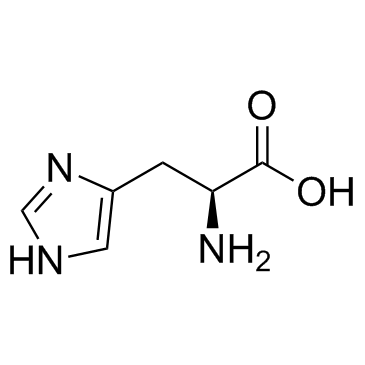
L-Histidine structure
|
Common Name | L-Histidine | ||
|---|---|---|---|---|
| CAS Number | 71-00-1 | Molecular Weight | 155.155 | |
| Density | 1.4±0.1 g/cm3 | Boiling Point | 458.9±35.0 °C at 760 mmHg | |
| Molecular Formula | C6H9N3O2 | Melting Point | 282 °C (dec.)(lit.) | |
| MSDS | Chinese USA | Flash Point | 231.3±25.9 °C | |
Use of L-HistidineL-Hisidine is an essential amino acid for infants. L-Hisidine is an inhibitor of mitochondrial glutamine transport. |
This table lists Chinese names, IUPAC names and various aliases of this chemical substance.
| Name | L-histidine |
|---|---|
| Synonym | More Synonyms |
This table contains bioactivity, target information and biological‑assay experimental data of this compound.
| Description | L-Hisidine is an essential amino acid for infants. L-Hisidine is an inhibitor of mitochondrial glutamine transport. |
|---|---|
| Related Catalog | |
| In Vitro | L-histidine completely inhibits growth and its effect on viability is inversely related to FLO11 expression. L-histidine does not affect the viability of the Δflo11 and S288c strains. L-histidine dramatically decreases air-liquid biofilm formation and adhesion to polystyrene of the flor yeasts with no effect on the transcription level of the FLO11 gene. Moreover, L-histidine modifies the chitin and glycans content on the cell-wall of flor yeasts[1]. |
| In Vivo | L-histidine (100 mg/kg) completely inhibits the brain edema in thioacetamide-treated rats[2]. Histamine release stimulated by high K+ from the hypothalamus in the L-histidine diet group is 60% of that in the control group. However, the concentrations of other monoamines and their metabolites are not changed by the L-histidine diet. The open-field tests show that the L-histidine diet group spends a shorter amount of time in the central zone, and the light/dark box tests demonstrate that the L-histidine diet group spends a shorter amount of time in the light box, suggesting that the L-histidine diet induced anxiety-like behaviors[3]. |
| Animal Admin | Rats: TAA (300 mg/kg i.p) is given to animals daily for 3 days. L-histidine (100 mg/kg) is dissolved in saline and injected (i.p.) daily 2 hours before each TAA injection. To prevent hypoglycemia and dehydration, rats are given 12.5 ml/kg of fluid therapy (5% dextrose and 0.45% saline with 20 mEq/L of potassium chloride) every 12 hours, s.c. Normal controls receive saline (vehicle used for TAA), whereas another group of rats are given L-histidine alone (100 mg/kg) daily for 3 days. TAA-treated rats are clinically monitored, and stages of encephalopathy are graded[2]. Mice: The control group is fed with the AIN-93G purified diet that contains 5.08 g L-histidine/kg, whereas the L-histidine diet group is fed with AIN-93G that contains 1.28 g L-histidine/kg (25% of the histidine content in AIN-93G). To equalize the total amount of amino acids, glutamine is added to the L-histidine diet to counterbalance the changes in the histidine content (18.32 g L-glutamine/kg AIN-93G vs. 23.72 g L-glutamine/kg L-histidine diet). Both diets are isonitrogenous. At 8 wk of age, the mice are weighed and assigned to 2 different diets. The mice are allowed ad libitum access to water and their respective diets, and they are housed for at least 2 wk in the laboratory before starting the experiments[3]. |
| References |
This table shows physicochemical parameters including melting point, boiling point, density, solubility and optical rotation. Missing data is marked as N/A.
| Density | 1.4±0.1 g/cm3 |
|---|---|
| Boiling Point | 458.9±35.0 °C at 760 mmHg |
| Melting Point | 282 °C (dec.)(lit.) |
| Molecular Formula | C6H9N3O2 |
| Molecular Weight | 155.155 |
| Flash Point | 231.3±25.9 °C |
| Exact Mass | 155.069473 |
| PSA | 92.00000 |
| LogP | -1.26 |
| Vapour Pressure | 0.0±1.2 mmHg at 25°C |
| Index of Refraction | 1.615 |
| InChIKey | HNDVDQJCIGZPNO-YFKPBYRVSA-N |
| SMILES | NC(Cc1cnc[nH]1)C(=O)O |
| Water Solubility | 41.6 g/L (25 ºC) |
This table provides MSDS information including hazard classification, first‑aid, fire‑fighting, spill handling, operation and storage instructions.
This table summarizes toxicological test data, acute & chronic toxicity and ecological hazard parameters for this chemical.
CHEMICAL IDENTIFICATION
HEALTH HAZARD DATAACUTE TOXICITY DATA
MUTATION DATA
|
This table covers safety warnings, protective measures, incompatible substances and disposal guidelines for this compound.
| Personal Protective Equipment | Eyeshields;Gloves;type N95 (US);type P1 (EN143) respirator filter |
|---|---|
| Hazard Codes | Xn: Harmful; |
| Risk Phrases | 22-36/37/38 |
| Safety Phrases | S24/25 |
| RIDADR | NONH for all modes of transport |
| WGK Germany | 2 |
| RTECS | MS3070000 |
| HS Code | 2933290090 |
This table presents publicly reported synthetic routes, reaction conditions, reactants and product information of the compound.
This table lists upstream starting materials and downstream derivative products related to this chemical.
| Precursor 10 | |
|---|---|
| DownStream 9 | |
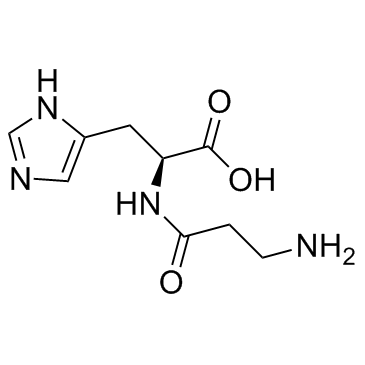 CAS#:305-84-0
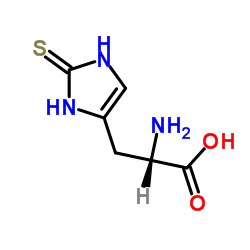 CAS#:2002-22-4
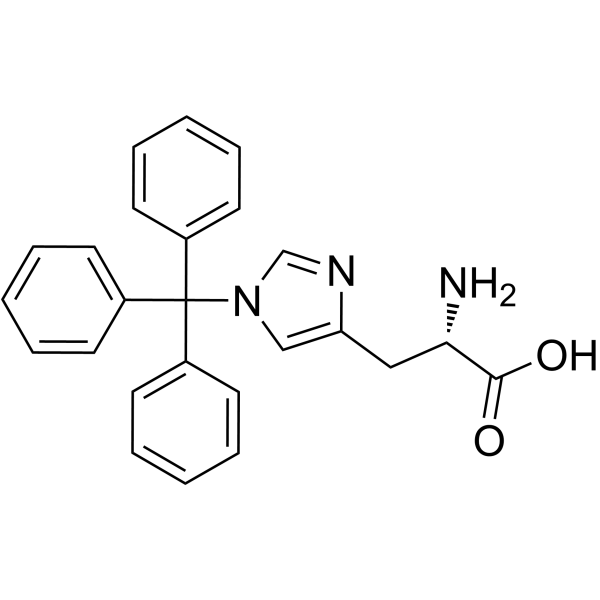 CAS#:35146-32-8
 CAS#:1499-46-3
 CAS#:83468-83-1
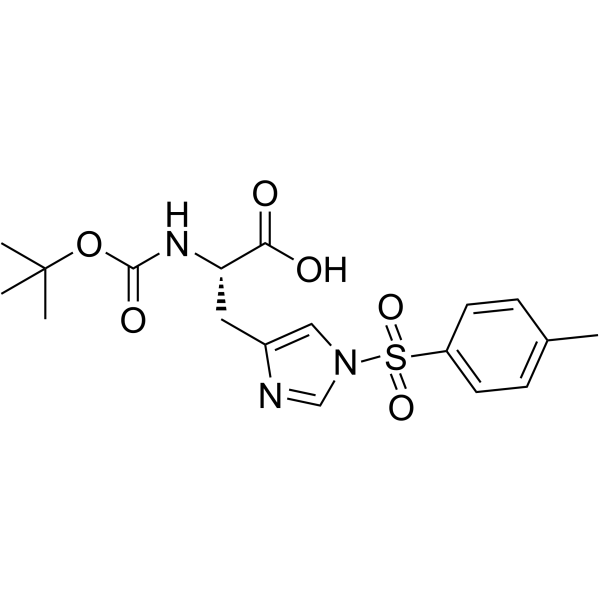 CAS#:35899-43-5
 CAS#:2489-13-6
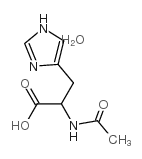 CAS#:10101-30-1
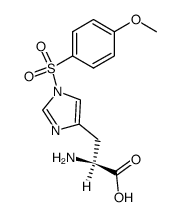 CAS#:73475-63-5
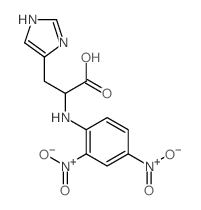 CAS#:10457-26-8
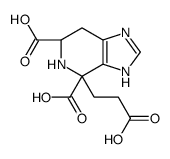 CAS#:110342-24-0
 CAS#:120293-52-9
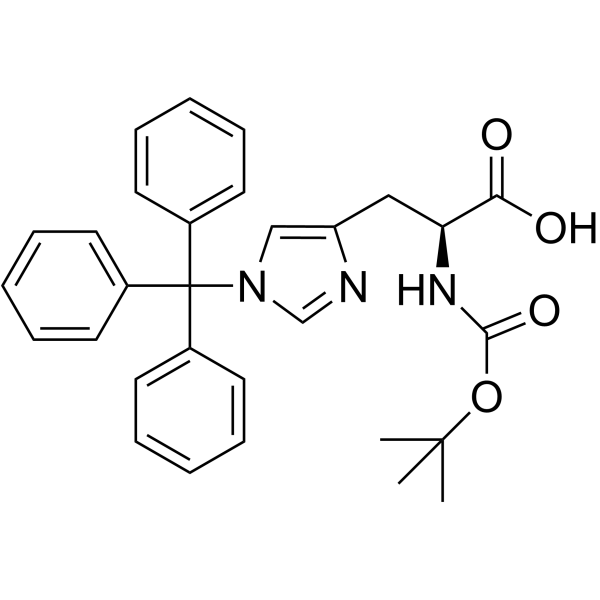 CAS#:32926-43-5
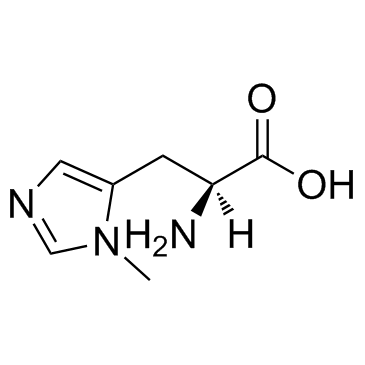 CAS#:368-16-1
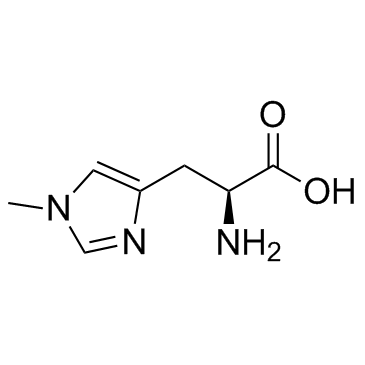 CAS#:332-80-9
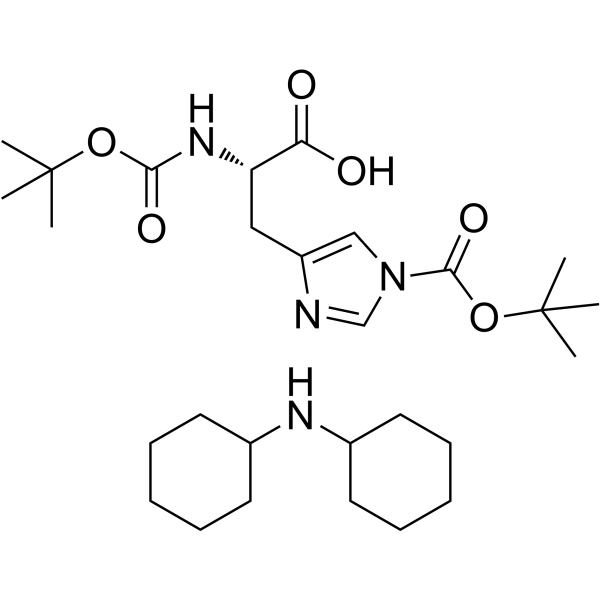 CAS#:31687-58-8
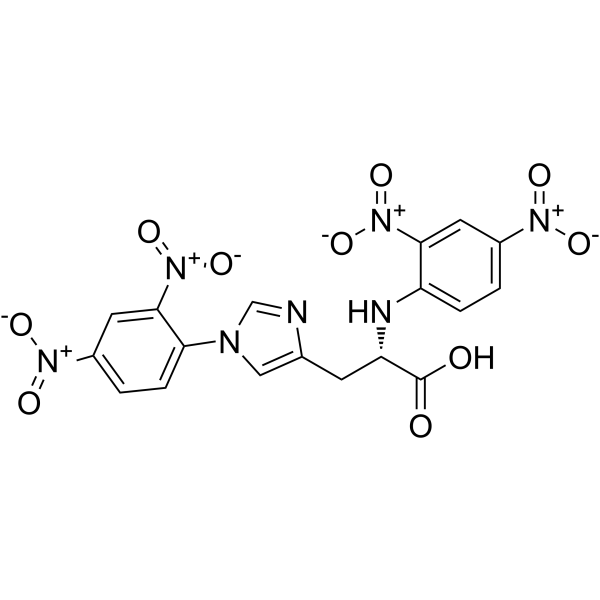 CAS#:3129-33-7
This table shows customs‑related data including HS‑code, tariff and regulatory conditions for import and export.
| HS Code | 2933290090 |
|---|---|
| Summary | 2933290090. other compounds containing an unfused imidazole ring (whether or not hydrogenated) in the structure. VAT:17.0%. Tax rebate rate:13.0%. . MFN tariff:6.5%. General tariff:20.0% |
This table lists relevant public references with title, journal and publication metadata for this compound.
|
Salicylic acid signaling controls the maturation and localization of the arabidopsis defense protein ACCELERATED CELL DEATH6.
Mol. Plant 7(8) , 1365-83, (2014) ACCELERATED CELL DEATH6 (ACD6) is a multipass membrane protein with an ankyrin domain that acts in a positive feedback loop with the defense signal salicylic acid (SA). This study implemented biochemi... |
|
|
G-quadruplex conformation and dynamics are determined by loop length and sequence.
Nucleic Acids Res. 42(12) , 8106-14, (2014) The quadruplex forming G-rich sequences are unevenly distributed throughout the human genome. Their enrichment in oncogenic promoters and telomeres has generated interest in targeting G-quadruplex (GQ... |
|
|
Der p 11 is a major allergen for house dust mite-allergic patients suffering from atopic dermatitis.
J. Invest. Dermatol. 135(1) , 102-9, (2014) House dust mites (HDMs) belong to the most potent indoor allergen sources worldwide and are associated with allergic manifestations in the respiratory tract and the skin. Here we studied the importanc... |
This table collects all English aliases, systematic names and CAS‑related synonyms of the compound.
| (S)-a-Amino-1H-imidazole-4-propanoic Acid |
| (S)-1H-Imidazole-4-alanine |
| a-Amino-4(or 5)-Imidazolepropionic Acid |
| d,l-histidine |
| FEMA 3694 |
| (S)-histidine |
| EINECS 200-745-3 |
| His |
| Histidine |
| H-L-HIS-OH |
| 3-(1H-imidazol-4-yl)-L-Alanine |
| hydrogen L-histidinate |
| L-His |
| Histidin |
| L-Histdine |
| L-Hisidine |
| MFCD00064315 |
| L-Histidine |
| H-His-OH |
This section contains frequently‑asked‑questions about this compound, including basic parameters, properties, storage conditions and corresponding answers.
| Q: What is the melting point of L-histidine? |
| A: Melting point of L-histidine is 282 °C (dec.)(lit.). |
| Q: What are the upstream materials of L-histidine? |
| A: Related upstream materials(CAS) of L-histidine: 305-84-0;2002-22-4;71-00-1;35146-32-8;1499-46-3;83468-83-1;35899-43-5;2489-13-6;10101-30-1;73475-63-5. |
| Q: What are the downstream products of L-histidine? |
| A: Related downstream products(CAS) of L-histidine: 10457-26-8;110342-24-0;120293-52-9;32926-43-5;368-16-1;332-80-9;31687-58-8;35146-32-8;3129-33-7. |
| Q: What English synonyms does L-histidine have? |
| A: English synonyms of L-histidine: (S)-a-Amino-1H-imidazole-4-propanoic Acid, (S)-1H-Imidazole-4-alanine, a-Amino-4(or 5)-Imidazolepropionic Acid, d,l-histidine, FEMA 3694, (S)-histidine, EINECS 200-745-3, His, Histidine, H-L-HIS-OH, 3-(1H-imidazol-4-yl)-L-Alanine, hydrogen L-histidinate, L-His, Histidin, L-Histdine, L-Hisidine, MFCD00064315, L-Histidine, H-His-OH. |
| Q: What is the English name of L-histidine? |
| A: The English name of L-histidine is L-histidine. |
| Q: What is the molecular formula of L-histidine? |
| A: Molecular formula of L-histidine is C6H9N3O2. |
| Q: What is the SMILES notation of L-histidine? |
| A: SMILES notation of L-histidine is NC(Cc1cnc[nH]1)C(=O)O. |
| Q: What is the CAS number of L-histidine? |
| A: CAS number of L-histidine is 71-00-1. |
| Q: What are the uses of L-histidine? |
| A: Main uses of L-histidine: L-Hisidine is an essential amino acid for infants. L-Hisidine is an inhibitor of mitochondrial glutamine transport. |
| Q: How is the water solubility of L-histidine? |
| A: Water solubility of L-histidine: 41.6 g/L (25 ºC). |
This table lists manufacturers and suppliers of this compound, including vendor names and product supply reference information.
| Shanghai Nianxing Industrial Co., Ltd |
| BioBioPha |
| Dayang Chem (Hangzhou) Co., Ltd. |
| Henan Tianfu Chemical Co., Ltd. |