Chlorzoxazone
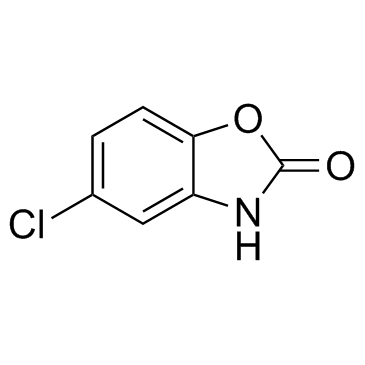
Chlorzoxazone structure
|
Common Name | Chlorzoxazone | ||
|---|---|---|---|---|
| CAS Number | 95-25-0 | Molecular Weight | 169.565 | |
| Density | 1.5±0.1 g/cm3 | Boiling Point | 336.9±34.0 °C at 760 mmHg | |
| Molecular Formula | C7H4ClNO2 | Melting Point | 191-192 °C(lit.) | |
| MSDS | Chinese USA | Flash Point | 157.5±25.7 °C | |
| Symbol |

GHS07 |
Signal Word | Warning | |
Use of ChlorzoxazoneChlorzoxazone is a centrally acting muscle relaxant used to treat muscle spasm and the resulting pain or discomfort. It acts on the spinal cord by depressing reflexes.Chlorzoxazone is currently being used as a marker substrate in vitro/vivo studies to quantify cytochrome P450 2E1 (CYP2E1) activity in humans. |
This table lists Chinese names, IUPAC names and various aliases of this chemical substance.
| Name | Chlorzoxazone |
|---|---|
| Synonym | More Synonyms |
This table contains bioactivity, target information and biological‑assay experimental data of this compound.
| Description | Chlorzoxazone is a centrally acting muscle relaxant used to treat muscle spasm and the resulting pain or discomfort. It acts on the spinal cord by depressing reflexes.Chlorzoxazone is currently being used as a marker substrate in vitro/vivo studies to quantify cytochrome P450 2E1 (CYP2E1) activity in humans. |
|---|---|
| Related Catalog | |
| References |
This table shows physicochemical parameters including melting point, boiling point, density, solubility and optical rotation. Missing data is marked as N/A.
| Density | 1.5±0.1 g/cm3 |
|---|---|
| Boiling Point | 336.9±34.0 °C at 760 mmHg |
| Melting Point | 191-192 °C(lit.) |
| Molecular Formula | C7H4ClNO2 |
| Molecular Weight | 169.565 |
| Flash Point | 157.5±25.7 °C |
| Exact Mass | 168.993057 |
| PSA | 46.26000 |
| LogP | 2.29 |
| Vapour Pressure | 0.0±0.8 mmHg at 25°C |
| Index of Refraction | 1.674 |
| InChIKey | TZFWDZFKRBELIQ-UHFFFAOYSA-N |
| SMILES | O=c1[nH]c2cc(Cl)ccc2o1 |
| Water Solubility | 0.1 g/100 mL |
This table provides MSDS information including hazard classification, first‑aid, fire‑fighting, spill handling, operation and storage instructions.
This table summarizes toxicological test data, acute & chronic toxicity and ecological hazard parameters for this chemical.
CHEMICAL IDENTIFICATION
HEALTH HAZARD DATAACUTE TOXICITY DATA
|
This table covers safety warnings, protective measures, incompatible substances and disposal guidelines for this compound.
| Symbol |
GHS07 |
|---|---|
| Signal Word | Warning |
| Hazard Statements | H302-H315-H319-H335 |
| Precautionary Statements | P301 + P312 + P330-P305 + P351 + P338 |
| Personal Protective Equipment | dust mask type N95 (US);Eyeshields;Gloves |
| Hazard Codes | Xi:Irritant |
| Risk Phrases | R36/37/38 |
| Safety Phrases | S26-S36-S24/25-S37/39 |
| RIDADR | NONH for all modes of transport |
| WGK Germany | 3 |
| RTECS | DM5250000 |
| HS Code | 2934999090 |
This table lists upstream starting materials and downstream derivative products related to this chemical.
| Precursor 0 | |
|---|---|
| DownStream 10 | |
![5-Chloro-3-[3-[4-(2-hydroxyethyl)piperazin-1-yl]propyl]benzoxazol-2(3H)-one structure](https://image.chemsrc.com/caspic/204/14733-75-6.png) CAS#:14733-75-6
CAS#:14733-75-6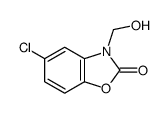 CAS#:17929-34-9
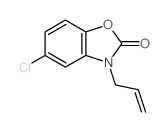 CAS#:24963-36-8
 CAS#:27087-06-5
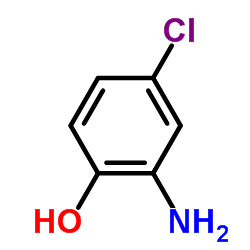 CAS#:95-85-2
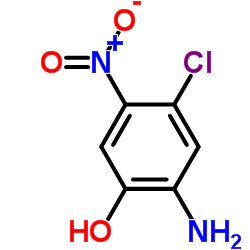 CAS#:6358-07-2
 CAS#:16376-55-9
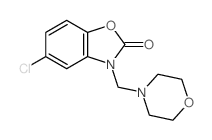 CAS#:16376-61-7
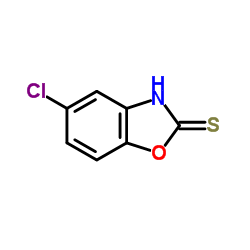 CAS#:22876-19-3
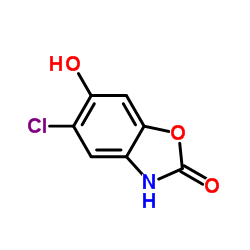 CAS#:1750-45-4
This table shows customs‑related data including HS‑code, tariff and regulatory conditions for import and export.
| HS Code | 2934999090 |
|---|---|
| Summary | 2934999090. other heterocyclic compounds. VAT:17.0%. Tax rebate rate:13.0%. . MFN tariff:6.5%. General tariff:20.0% |
This table lists relevant public references with title, journal and publication metadata for this compound.
|
Effect of commercially available green and black tea beverages on drug-metabolizing enzymes and oxidative stress in Wistar rats.
Food Chem. Toxicol. 70 , 120-7, (2014) The effect of commercially available green tea (GT) and black tea (BT) drinks on drug metabolizing enzymes (DME) and oxidative stress in rats was investigated. Male Wistar rats were fed a laboratory c... |
|
|
Novel Marmoset Cytochrome P450 2C19 in Livers Efficiently Metabolizes Human P450 2C9 and 2C19 Substrates, S-Warfarin, Tolbutamide, Flurbiprofen, and Omeprazole.
Drug Metab. Dispos. 43 , 1408-16, (2015) The common marmoset (Callithrix jacchus), a small New World monkey, has the potential for use in human drug development due to its evolutionary closeness to humans. Four novel cDNAs, encoding cytochro... |
|
|
Effects of age increase on hepatic expression and activity of cytochrome P450 in male C57BL/6 mice.
Arch. Pharm. Res. 38 , 857-64, (2015) Effects of aging on hepatic expression and activity of cytochrome P450 (CYP) isoforms were investigated in male mice aged 2, 6, 18, and 30 months. Microsomal protein, total CYP, cytochrome b5 and NADP... |
This table contains target information, in‑vitro & in‑vivo assay data for this compound.
This table collects all English aliases, systematic names and CAS‑related synonyms of the compound.
| Myoflexin |
| chlorzoxazone |
| chloroxazone |
| 5-chloro-2(3h)-benzoxazolone |
| T56 BN DOJ CQ GG |
| Chlorzoxazone (350 mg) |
| Paraflex |
| CHLORZOXAZONE-D3 |
| EINECS 202-403-9 |
| CHLORZOXANE |
| Biomioran |
| 5-chloro-3H-benzooxazol-2-one |
| Solaxin |
| Myoflexine |
| MFCD00005717 |
| 5-Chloro-2-benzoxazolone |
| Chlorzoxazon |
| Chlorzoxazone-13C,15N,D2 |
| 5-chloro-3H-1,3-benzoxazol-2-one |
| 5-Chlor-2-hydroxy-benzoxazol |
| 5-Chloro-1,3-benzoxazol-2(3H)-one |
| 5-CHLOROBENZOXAZOL-2-ONE |
| T56 BMVOJ GG |
| 5-Chloro-2-hydroxybenzoxazole |
| Pathorysin |
| CHLOROXAZON |
This section contains frequently‑asked‑questions about this compound, including basic parameters, properties, storage conditions and corresponding answers.
| Q: What is the CAS number of Chlorzoxazone? |
| A: CAS number of Chlorzoxazone is 95-25-0. |
| Q: What is the polar surface area (PSA) of Chlorzoxazone? |
| A: Polar surface area (PSA) of Chlorzoxazone is 46.26000. |
| Q: What is the safety information for Chlorzoxazone? |
| A: Safety information for Chlorzoxazone: S26-S36-S24/25-S37/39. |
| Q: What is the SMILES notation of Chlorzoxazone? |
| A: SMILES notation of Chlorzoxazone is O=c1[nH]c2cc(Cl)ccc2o1. |
| Q: What is the molecular weight of Chlorzoxazone? |
| A: Molecular weight of Chlorzoxazone is 169.565. |
| Q: What is the InChIKey of Chlorzoxazone? |
| A: InChIKey of Chlorzoxazone is TZFWDZFKRBELIQ-UHFFFAOYSA-N. |
| Q: What is the English name of Chlorzoxazone? |
| A: The English name of Chlorzoxazone is Chlorzoxazone. |
| Q: What is the LogP of Chlorzoxazone? |
| A: LogP of Chlorzoxazone is 2.29. |
| Q: What is the boiling point of Chlorzoxazone? |
| A: Boiling point of Chlorzoxazone is 336.9±34.0 °C at 760 mmHg. |
| Q: What are the uses of Chlorzoxazone? |
| A: Main uses of Chlorzoxazone: Chlorzoxazone is a centrally acting muscle relaxant used to treat muscle spasm and the resulting pain or discomfort. It acts on the spinal cord by depressing reflexes.Chlorzoxazone is currently being used as a marker substrate in vitro/vivo studies to quantify cytochrome P450 2E1 (CYP2E1) activity in humans. |
This table lists manufacturers and suppliers of this compound, including vendor names and product supply reference information.
| Shanghai Nianxing Industrial Co., Ltd |
| Dayang Chem (Hangzhou) Co., Ltd. |
| Henan Tianfu Chemical Co., Ltd. |