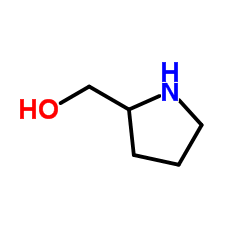
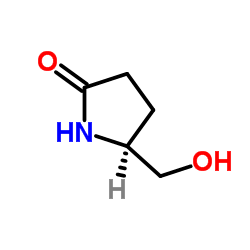
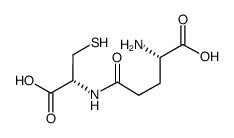
L-(+)Sodium glutamate

Modify Date: 2026-06-30 08:16:00

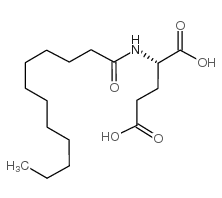
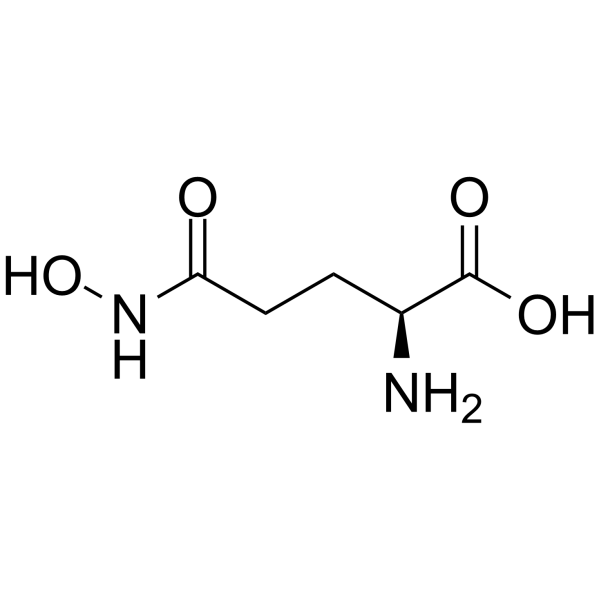
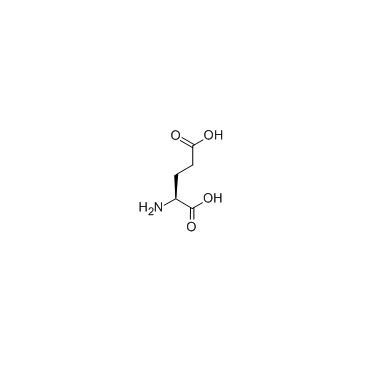
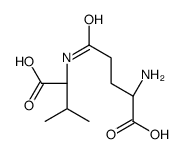
L-(+)Sodium glutamate Structure
L-(+)Sodium glutamate structure
Common Name L-(+)Sodium glutamate
CAS Number 142-47-2 Molecular Weight 169.111
Density N/A Boiling Point 333.8ºC at 760 mmHg
Molecular Formula C5H8NNaO4 Melting Point 232°C
MSDS Chinese USA Flash Point 155.7ºC

 Use of L-(+)Sodium glutamate


L-Glutamic acid monosodium salt (Monosodium glutamate) is an activator of mGlu1 receptor.

 Names

This table lists Chinese names, IUPAC names and various aliases of this chemical substance.

Name monosodium L-glutamate
Synonym More Synonyms

 L-(+)Sodium glutamate Biological Activity

This table contains bioactivity, target information and biological‑assay experimental data of this compound.

Description L-Glutamic acid monosodium salt (Monosodium glutamate) is an activator of mGlu1 receptor.
Related Catalog
Target

mGlu1 receptor[1]

In Vivo A single systemic injection of L-Glutamic acid monosodium salt (MSG) (3 g/kg) to PND9 mice causes extensive retinal degeneration and reduces the number of Brn-3a+RGCs by >70% with respect to control mice treated with saline; In mice treated with L-Glutamic acid monosodium salt and JNJ16259685, the number of RGC is reduced by only <20%, and the resulting value is not significantly different from values obtained in all other groups of mice, including control mice. L-Glutamic acid monosodium salt administration to wild-type BALB/c littermates reduces RGC number to a lower extent than in C57BL/6J mice, but the reduction is still highly significant[1].
Animal Admin For toxicity experiments, mice at PND9 (n=3-9 mice per group) are treated as follows. Two groups receive a subcutaneous (s.c.) injection of corn oil, following, 30 min later, by s.c. injection of either saline or L-Glutamic acid monosodium salt (3 g/kg); two additional groups are treated with 3,4-dihydro-2 H-pyrano[2,3-b]quinolin-7-yl-(cis-4-methoxycyclohexyl)-methanone, dissolving in corn oil (2.5 mg/kg) following, 30 min later, by a s.c. injection of either saline or L-Glutamic acid monosodium salt. In another set of experiments, four groups of crv4 mice or their wild-type littermates (n=5-7 mice per group) are injected s.c. with either saline or L-Glutamic acid monosodium salt (3 g/kg)[1].
References

[1]. Liberatore F, et al. Permissive role for mglu1 metabotropic glutamate receptors in excitotoxic retinal degeneration. Neuroscience. 2017 Sep 14. pii: S0306-4522(17)30640-1.

 Chemical & Physical Properties

This table shows physicochemical parameters including melting point, boiling point, density, solubility and optical rotation. Missing data is marked as N/A.

Boiling Point 333.8ºC at 760 mmHg
Melting Point 232°C
Molecular Formula C5H8NNaO4
Molecular Weight 169.111
Flash Point 155.7ºC
Exact Mass 169.035110
PSA 103.45000
Vapour Pressure 2.55E-05mmHg at 25°C
Index of Refraction 25 ° (C=10, 2mol/L HCl)
InChIKey LPUQAYUQRXPFSQ-DFWYDOINSA-M
SMILES NC(CCC(=O)[O-])C(=O)O.[Na+]
Water Solubility >=10 g/100 mL at 20 ºC

 MSDS

This table provides MSDS information including hazard classification, first‑aid, fire‑fighting, spill handling, operation and storage instructions.

 Toxicological Information

This table summarizes toxicological test data, acute & chronic toxicity and ecological hazard parameters for this chemical.

CHEMICAL IDENTIFICATION

RTECS NUMBER :
MA1575000
CHEMICAL NAME :
Glutamic acid, monosodium salt, L-(+)-
CAS REGISTRY NUMBER :
142-47-2
LAST UPDATED :
199701
DATA ITEMS CITED :
35
MOLECULAR FORMULA :
C5-H8-N-O4.Na
MOLECULAR WEIGHT :
169.13
WISWESSER LINE NOTATION :
QVYZ2VO &-NA- -L

HEALTH HAZARD DATA

ACUTE TOXICITY DATA

TYPE OF TEST :
TDLo - Lowest published toxic dose
ROUTE OF EXPOSURE :
Oral
SPECIES OBSERVED :
Human - woman
DOSE/DURATION :
50 mg/kg
TOXIC EFFECTS :
Lungs, Thorax, or Respiration - dyspnea
REFERENCE :
NEJMAG New England Journal of Medicine. (Massachusetts Medical Soc., 10 Shattuck St., Boston, MA 02115) V.198- 1928- Volume(issue)/page/year: 305,1154,1981
TYPE OF TEST :
TDLo - Lowest published toxic dose
ROUTE OF EXPOSURE :
Oral
SPECIES OBSERVED :
Human
DOSE/DURATION :
43 mg/kg
TOXIC EFFECTS :
Behavioral - somnolence (general depressed activity) Behavioral - hallucinations, distorted perceptions Gastrointestinal - nausea or vomiting
REFERENCE :
HYSAAV Hygiene and Sanitation (USSR). English translation of GISAAA. (Springfield, VA) 1964-71. Discontinued. Volume(issue)/page/year: 36(9),364,1971
TYPE OF TEST :
TDLo - Lowest published toxic dose
ROUTE OF EXPOSURE :
Oral
SPECIES OBSERVED :
Human - man
DOSE/DURATION :
3571 ug/kg
TOXIC EFFECTS :
Skin and Appendages - dermatitis, other (after systemic exposure)
REFERENCE :
LANCAO Lancet. (7 Adam St., London WC2N 6AD, UK) V.1- 1823- Volume(issue)/page/year: 1,988,1987
TYPE OF TEST :
TDLo - Lowest published toxic dose
ROUTE OF EXPOSURE :
Intravenous
SPECIES OBSERVED :
Human
DOSE/DURATION :
714 ug/kg
TOXIC EFFECTS :
Behavioral - headache
REFERENCE :
SCIEAS Science. (American Assoc. for the Advancement of Science, 1333 H St., NW, Washington, DC 20005) V.1- 1895- Volume(issue)/page/year: 163,826,1969
TYPE OF TEST :
LD50 - Lethal dose, 50 percent kill
ROUTE OF EXPOSURE :
Oral
SPECIES OBSERVED :
Rodent - rat
DOSE/DURATION :
16600 mg/kg
TOXIC EFFECTS :
Details of toxic effects not reported other than lethal dose value
REFERENCE :
FRPPAO Farmaco, Edizione Pratica. (Casella Postale 227, 27100 Pavia, Italy) V.8-43 1953-88 For publisher information, see FRMCE8 Volume(issue)/page/year: 27,19,1972
TYPE OF TEST :
LD50 - Lethal dose, 50 percent kill
ROUTE OF EXPOSURE :
Intraperitoneal
SPECIES OBSERVED :
Rodent - rat
DOSE/DURATION :
4253 mg/kg
TOXIC EFFECTS :
Behavioral - convulsions or effect on seizure threshold Behavioral - tetany
REFERENCE :
HSZPAZ Hoppe-Seyler's Zeitschrift fuer Physiologische Chemie. (Walter de Gruyter, Inc., 200 Saw Mill River Rd., Hawthorne, NY 10532) V.21- 1895/96- Volume(issue)/page/year: 300,97,1955
TYPE OF TEST :
LD50 - Lethal dose, 50 percent kill
ROUTE OF EXPOSURE :
Subcutaneous
SPECIES OBSERVED :
Rodent - rat
DOSE/DURATION :
5580 mg/kg
TOXIC EFFECTS :
Behavioral - tremor Behavioral - ataxia Lungs, Thorax, or Respiration - cyanosis
REFERENCE :
OYYAA2 Oyo Yakuri. Pharmacometrics. (Oyo Yakuri Kenkyukai, CPO Box 180, Sendai 980-91, Japan) V.1- 1967- Volume(issue)/page/year: 15,433,1978
TYPE OF TEST :
LD50 - Lethal dose, 50 percent kill
ROUTE OF EXPOSURE :
Intravenous
SPECIES OBSERVED :
Rodent - rat
DOSE/DURATION :
3300 mg/kg
TOXIC EFFECTS :
Sense Organs and Special Senses (Eye) - effect, not otherwise specified Autonomic Nervous System - other (direct) parasympathomimetic Behavioral - ataxia
REFERENCE :
OYYAA2 Oyo Yakuri. Pharmacometrics. (Oyo Yakuri Kenkyukai, CPO Box 180, Sendai 980-91, Japan) V.1- 1967- Volume(issue)/page/year: 15,433,1978
TYPE OF TEST :
LD50 - Lethal dose, 50 percent kill
ROUTE OF EXPOSURE :
Oral
SPECIES OBSERVED :
Rodent - mouse
DOSE/DURATION :
11400 mg/kg
TOXIC EFFECTS :
Details of toxic effects not reported other than lethal dose value
REFERENCE :
AEPPAE Naunyn-Schmiedeberg's Archiv fuer Experimentelle Pathologie und Pharmakologie. (Berlin, Ger.) V.110-253, 1925-66. For publisher information, see NSAPCC. Volume(issue)/page/year: 227,214,1955
TYPE OF TEST :
LD50 - Lethal dose, 50 percent kill
ROUTE OF EXPOSURE :
Intraperitoneal
SPECIES OBSERVED :
Rodent - mouse
DOSE/DURATION :
3800 mg/kg
TOXIC EFFECTS :
Details of toxic effects not reported other than lethal dose value
REFERENCE :
AEPPAE Naunyn-Schmiedeberg's Archiv fuer Experimentelle Pathologie und Pharmakologie. (Berlin, Ger.) V.110-253, 1925-66. For publisher information, see NSAPCC. Volume(issue)/page/year: 227,214,1955
TYPE OF TEST :
LD50 - Lethal dose, 50 percent kill
ROUTE OF EXPOSURE :
Subcutaneous
SPECIES OBSERVED :
Rodent - mouse
DOSE/DURATION :
8200 mg/kg
TOXIC EFFECTS :
Behavioral - convulsions or effect on seizure threshold Behavioral - excitement
REFERENCE :
OYYAA2 Oyo Yakuri. Pharmacometrics. (Oyo Yakuri Kenkyukai, CPO Box 180, Sendai 980-91, Japan) V.1- 1967- Volume(issue)/page/year: 15,433,1978
TYPE OF TEST :
LD50 - Lethal dose, 50 percent kill
ROUTE OF EXPOSURE :
Intravenous
SPECIES OBSERVED :
Rodent - mouse
DOSE/DURATION :
30 gm/kg
TOXIC EFFECTS :
Details of toxic effects not reported other than lethal dose value
REFERENCE :
FAONAU FAO Nutrition Meetings Report Series. (Rome, Italy) No.?-57, 1948-77. Discontinued. Volume(issue)/page/year: 53A,424,1974
TYPE OF TEST :
LD50 - Lethal dose, 50 percent kill
ROUTE OF EXPOSURE :
Subcutaneous
SPECIES OBSERVED :
Mammal - cat
DOSE/DURATION :
8 gm/kg
TOXIC EFFECTS :
Details of toxic effects not reported other than lethal dose value
REFERENCE :
EbeAG# Personal Communication from A.G. Ebert, International Glutamate Technical Committee, 85 Walnut St., Watertown, MA 02172, Nov. 19, 1973 Volume(issue)/page/year: 19NOV1973
TYPE OF TEST :
LD50 - Lethal dose, 50 percent kill
ROUTE OF EXPOSURE :
Intraperitoneal
SPECIES OBSERVED :
Rodent - guinea pig
DOSE/DURATION :
15 gm/kg
TOXIC EFFECTS :
Details of toxic effects not reported other than lethal dose value
REFERENCE :
FAONAU FAO Nutrition Meetings Report Series. (Rome, Italy) No.?-57, 1948-77. Discontinued. Volume(issue)/page/year: 53A,424,1974 ** OTHER MULTIPLE DOSE TOXICITY DATA **
TYPE OF TEST :
TDLo - Lowest published toxic dose
ROUTE OF EXPOSURE :
Subcutaneous
SPECIES OBSERVED :
Rodent - mouse
DOSE/DURATION :
24 mg/kg/6D-I
TOXIC EFFECTS :
Endocrine - hyperglycemia Blood - changes in serum composition (e.g. TP, bilirubin, cholesterol) Biochemical - Metabolism (Intermediary) - lipids including transport
REFERENCE :
TOLED5 Toxicology Letters. (Elsevier Science Pub. B.V., POB 211, 1000 AE Amsterdam, Netherlands) V.1- 1977- Volume(issue)/page/year: 45,195,1989 ** REPRODUCTIVE DATA **
TYPE OF TEST :
TDLo - Lowest published toxic dose
ROUTE OF EXPOSURE :
Oral
DOSE :
1315 gm/kg
SEX/DURATION :
multigenerations
TOXIC EFFECTS :
Reproductive - Specific Developmental Abnormalities - Central Nervous System Reproductive - Specific Developmental Abnormalities - hepatobiliary system Reproductive - Effects on Newborn - biochemical and metabolic
REFERENCE :
EXPEAM Experientia. (Birkhaeuser Verlag, POB 133, CH-4010 Basel, Switzerland) V.1- 1945- Volume(issue)/page/year: 28,260,1972
TYPE OF TEST :
TDLo - Lowest published toxic dose
ROUTE OF EXPOSURE :
Oral
DOSE :
48 gm/kg
SEX/DURATION :
female 14 day(s) pre-mating - 21 day(s) post-birth
TOXIC EFFECTS :
Reproductive - Effects on Newborn - behavioral
REFERENCE :
TXAPA9 Toxicology and Applied Pharmacology. (Academic Press, Inc., 1 E. First St., Duluth, MN 55802) V.1- 1959- Volume(issue)/page/year: 50,267,1979
TYPE OF TEST :
TDLo - Lowest published toxic dose
ROUTE OF EXPOSURE :
Oral
DOSE :
19500 mg/kg
SEX/DURATION :
multigenerations
TOXIC EFFECTS :
Reproductive - Effects on Embryo or Fetus - cytological changes (including somatic cell genetic material)
REFERENCE :
QUNUAZ Quaderni della Nutrizione. Notes on Nutrition. (North Cohocton, NY) V.1-31, 1934-71. Discontinued. Volume(issue)/page/year: 31,85,1971
TYPE OF TEST :
TDLo - Lowest published toxic dose
ROUTE OF EXPOSURE :
Oral
DOSE :
140 gm/kg
SEX/DURATION :
female 7-20 day(s) after conception
TOXIC EFFECTS :
Reproductive - Effects on Newborn - growth statistics (e.g.%, reduced weight gain) Reproductive - Effects on Newborn - behavioral Reproductive - Effects on Newborn - other postnatal measures or effects
REFERENCE :
IJNUB7 International Journal of Neuroscience. (Gordon & Breach Science Pub. S.A., 50 W. 23rd St., New York, NY 10010) V.1- 1970- Volume(issue)/page/year: 23,117,1984
TYPE OF TEST :
TDLo - Lowest published toxic dose
ROUTE OF EXPOSURE :
Subcutaneous
DOSE :
40 gm/kg
SEX/DURATION :
female 10 day(s) pre-mating
TOXIC EFFECTS :
Reproductive - Maternal Effects - ovaries, fallopian tubes Reproductive - Maternal Effects - uterus, cervix, vagina Reproductive - Maternal Effects - menstrual cycle changes or disorders
REFERENCE :
TOLED5 Toxicology Letters. (Elsevier Science Pub. B.V., POB 211, 1000 AE Amsterdam, Netherlands) V.1- 1977- Volume(issue)/page/year: 4,359,1979
TYPE OF TEST :
TDLo - Lowest published toxic dose
ROUTE OF EXPOSURE :
Subcutaneous
DOSE :
40 gm/kg
SEX/DURATION :
male 10 day(s) pre-mating
TOXIC EFFECTS :
Reproductive - Paternal Effects - testes, epididymis, sperm duct Reproductive - Paternal Effects - prostate, seminal vesicle, Cowper's gland, accessory glands
REFERENCE :
TOLED5 Toxicology Letters. (Elsevier Science Pub. B.V., POB 211, 1000 AE Amsterdam, Netherlands) V.1- 1977- Volume(issue)/page/year: 4,359,1979
TYPE OF TEST :
TDLo - Lowest published toxic dose
ROUTE OF EXPOSURE :
Subcutaneous
DOSE :
1 gm/kg
SEX/DURATION :
male 1 day(s) pre-mating
TOXIC EFFECTS :
Reproductive - Paternal Effects - other effects on male
REFERENCE :
TOLED5 Toxicology Letters. (Elsevier Science Pub. B.V., POB 211, 1000 AE Amsterdam, Netherlands) V.1- 1977- Volume(issue)/page/year: 1,207,1978
TYPE OF TEST :
TDLo - Lowest published toxic dose
ROUTE OF EXPOSURE :
Subcutaneous
DOSE :
34100 mg/kg
SEX/DURATION :
male 10 day(s) pre-mating
TOXIC EFFECTS :
Reproductive - Paternal Effects - testes, epididymis, sperm duct Reproductive - Fertility - male fertility index (e.g. # males impregnating females per # males exposed to fertile nonpregnant females)
REFERENCE :
NETOD7 Neurobehavioral Toxicology. (Fayetteville, NY) V.1-2, 1979-80. For publisher information, see NTOTDY. Volume(issue)/page/year: 1,1,1979
TYPE OF TEST :
TDLo - Lowest published toxic dose
ROUTE OF EXPOSURE :
Subcutaneous
DOSE :
5104 mg/kg
SEX/DURATION :
female 17 day(s) after conception
TOXIC EFFECTS :
Reproductive - Specific Developmental Abnormalities - Central Nervous System Reproductive - Effects on Newborn - growth statistics (e.g.%, reduced weight gain)
REFERENCE :
SEIJBO Senten Ijo. Congenital Anomalies. (Nippon Senten Ijo Gakkai, c/o Kinki Daigaku Igakubu Kaibagaku Kyoshitsu, 380 Nishiyama, Sayama-cho, Mirami-Kawachi-gun, Osaka-fu, Japan) V.1-26, 1960-86. For publisher information, see CGANE7. Volume(issue)/page/year: 14,77,1974
TYPE OF TEST :
TDLo - Lowest published toxic dose
ROUTE OF EXPOSURE :
Subcutaneous
DOSE :
5104 mg/kg
SEX/DURATION :
female 16 day(s) after conception
TOXIC EFFECTS :
Reproductive - Effects on Newborn - live birth index (measured after birth)
REFERENCE :
SEIJBO Senten Ijo. Congenital Anomalies. (Nippon Senten Ijo Gakkai, c/o Kinki Daigaku Igakubu Kaibagaku Kyoshitsu, 380 Nishiyama, Sayama-cho, Mirami-Kawachi-gun, Osaka-fu, Japan) V.1-26, 1960-86. For publisher information, see CGANE7. Volume(issue)/page/year: 14,77,1974
TYPE OF TEST :
TDLo - Lowest published toxic dose
ROUTE OF EXPOSURE :
Subcutaneous
DOSE :
15 gm/kg
SEX/DURATION :
female 6 day(s) pre-mating
TOXIC EFFECTS :
Reproductive - Maternal Effects - parturition
REFERENCE :
JTSCDR Journal of Toxicological Sciences. (Japanese Soc. of Toxicological Sciences, 4th Floor, Gakkai Center Bldg., 4-16, Yayoi 2-chome, Bunkyo-ku, Tokyo 113, Japan) V.1- 1976- Volume(issue)/page/year: 3,264,1978
TYPE OF TEST :
TDLo - Lowest published toxic dose
ROUTE OF EXPOSURE :
Subcutaneous
DOSE :
58 gm/kg
SEX/DURATION :
male 10 day(s) pre-mating
TOXIC EFFECTS :
Reproductive - Paternal Effects - testes, epididymis, sperm duct Reproductive - Fertility - male fertility index (e.g. # males impregnating females per # males exposed to fertile nonpregnant females)
REFERENCE :
TJADAB Teratology, The International Journal of Abnormal Development. (Alan R. Liss, Inc., 41 E. 11th St., New York, NY 10003) V.1- 1968- Volume(issue)/page/year: 27,69A,1983
TYPE OF TEST :
TDLo - Lowest published toxic dose
ROUTE OF EXPOSURE :
Subcutaneous
DOSE :
16 gm/kg
SEX/DURATION :
female 2 day(s) pre-mating
TOXIC EFFECTS :
Reproductive - Paternal Effects - testes, epididymis, sperm duct Reproductive - Paternal Effects - prostate, seminal vesicle, Cowper's gland, accessory glands
REFERENCE :
BIREBV Biology of Reproduction. (Soc. for the Study of Reproduction, 309 W. Clark St., Champaign, IL 61820) V.1- 1969- Volume(issue)/page/year: 22,687,1980
TYPE OF TEST :
TDLo - Lowest published toxic dose
ROUTE OF EXPOSURE :
Subcutaneous
DOSE :
8 gm/kg
SEX/DURATION :
female 1 day(s) pre-mating
TOXIC EFFECTS :
Reproductive - Maternal Effects - ovaries, fallopian tubes Reproductive - Maternal Effects - uterus, cervix, vagina
REFERENCE :
BIREBV Biology of Reproduction. (Soc. for the Study of Reproduction, 309 W. Clark St., Champaign, IL 61820) V.1- 1969- Volume(issue)/page/year: 17,404,1977
TYPE OF TEST :
TDLo - Lowest published toxic dose
ROUTE OF EXPOSURE :
Subcutaneous
DOSE :
20 gm/kg
SEX/DURATION :
female 5 day(s) pre-mating
TOXIC EFFECTS :
Reproductive - Maternal Effects - oogenesis
REFERENCE :
BIREBV Biology of Reproduction. (Soc. for the Study of Reproduction, 309 W. Clark St., Champaign, IL 61820) V.1- 1969- Volume(issue)/page/year: 14,362,1976 *** NIOSH STANDARDS DEVELOPMENT AND SURVEILLANCE DATA *** NIOSH OCCUPATIONAL EXPOSURE SURVEY DATA : NOHS - National Occupational Hazard Survey (1974) NOHS Hazard Code - 82886 No. of Facilities: 1087 (estimated) No. of Industries: 7 No. of Occupations: 11 No. of Employees: 21247 (estimated) NOES - National Occupational Exposure Survey (1983) NOES Hazard Code - 82886 No. of Facilities: 2623 (estimated) No. of Industries: 18 No. of Occupations: 42 No. of Employees: 60341 (estimated) No. of Female Employees: 22829 (estimated)

 Safety Information

This table covers safety warnings, protective measures, incompatible substances and disposal guidelines for this compound.

Hazard Codes O
Risk Phrases R20/21/22
WGK Germany 2
RTECS MA1578000
HS Code 2922422000

 Synthetic Route

This table presents publicly reported synthetic routes, reaction conditions, reactants and product information of the compound.

~%

L-(+)Sodium glutamate Structure

L-(+)Sodium glu...

CAS#:142-47-2

Learn More
Literature: US2004/225133 A1, ; Page 7-8 ;

 Customs

This table shows customs‑related data including HS‑code, tariff and regulatory conditions for import and export.

HS Code 2922499990
Summary HS:2922499990 other amino-acids, other than those containing more than one kind of oxygen function, and their esters; salts thereof VAT:17.0% Tax rebate rate:9.0% Supervision conditions:AB(certificate of inspection for goods inward,certificate of inspection for goods outward) MFN tariff:6.5% General tariff:30.0%

 L-(+)Sodium glutamateBioassay

View more

This table contains target information, in‑vitro & in‑vivo assay data for this compound.

Name: Luminescence-based cell-based primary high throughput screening assay to identify ago...
Source: The Scripps Research Institute Molecular Screening Center
Target: mu-type opioid receptor isoform MOR-1 [Homo sapiens]
External Id: OPRM1-OPRD1_AG_LUMI_1536_1X%ACT PRUN
Name: QFRET-based biochemical primary high throughput screening assay to identify exosite i...
Source: The Scripps Research Institute Molecular Screening Center
Target: disintegrin and metalloproteinase domain-containing protein 17 preproprotein [Homo sapiens]
External Id: ADAM17_INH_QFRET_1536_1X%INH PRUN
Name: Fluorescence-based cell-based primary high throughput screening assay to identify ago...
Source: The Scripps Research Institute Molecular Screening Center
Target: muscarinic acetylcholine receptor M1 [Homo sapiens]
External Id: CHRM1_AG_FLUO8_1536_1X%ACT PRUN
Name: qHTS for Inhibitors of human tyrosyl-DNA phosphodiesterase 1 (TDP1): qHTS in cells in...
Source: NCGC
Target: TDP1 protein [Homo sapiens]
External Id: TDP1100
Name: qHTS for Inhibitors of human tyrosyl-DNA phosphodiesterase 1 (TDP1): qHTS in cells in...
Source: NCGC
Target: TDP1 protein [Homo sapiens]
External Id: TDP1101
Name: Schnurri-3 Inhibitors: specific inducers of adult bone formation Measured in Cell-Bas...
Source: Broad Institute
Target: N/A
External Id: 2134-01_Inhibitor_SinglePoint_HTS_Activity_Set2
Name: Fluorescence polarization to screen for inhibitor that competite the binding of FadD2...
Source: Broad Institute
Target: FATTY-ACID-CoA LIGASE FADD28 (FATTY-ACID-CoA SYNTHETASE)
External Id: 2147-01_Inhibitor_SinglePoint_HTS_Activity
Name: Bursicon-induced LGR2 mediated cAMP production in LGR-2/CRE6x-Luciferase co-transfect...
Source: Broad Institute
Target: N/A
External Id: Bursicon-induced LGR2 mediated cAMP production in LGR-2/CRE6x-Luciferase co-transfected HEK293 cells Inhibition - 7011-01_Antagonist_SinglePoint_HTS_Activity
Name: qHTS for Inhibitors of AMA1-RON; Towards Development of Antimalarial Drug Lead: Prima...
Source: NCGC
Target: apical membrane antigen 1, AMA1 [Plasmodium falciparum 3D7]
External Id: AMA1100
Name: Fluorescence polarization-based biochemical high throughput primary assay to identify...
Source: The Scripps Research Institute Molecular Screening Center
Target: abhydrolase domain-containing protein 4 isoform 1 [Mus musculus]
External Id: ABHD4_INH_FP_1536_1X%INH PRUN
Total 86, Current Page 1 of 9
1
2
3
4
5

 Synonyms

This table collects all English aliases, systematic names and CAS‑related synonyms of the compound.

MSG
MFCD00013074
Glutamate monosodium salt
L-GLUTAMIC ACID SODIUM SALT
monosodium-l-glutamate
Sodium (2S)-2-ammoniopentanedioate
L-(+)Sodium Glutamate
L-Glutamic acid monosodium salt
(S)-2-Aminopentanedioic acid,L-Glutamic acid monosodium salt,Glu
L-Sodium glutamate hydrate
Monosodium glutamate
sodium L-glutamate
EINECS 205-538-1
L-Glutamic acid, sodium salt
L-Glutamic acid monosodium salt hydrate
Glutamic acid sodium salt
sodium glutamate
Glutamic acid, monosodium salt
L-Glutamic acid, monosodium salt
L-Glutamic acid, sodium salt (1:1)

 L-(+)Sodium glutamate | FAQ

This section contains frequently‑asked‑questions about this compound, including basic parameters, properties, storage conditions and corresponding answers.

Q: What is the molecular weight of monosodium L-glutamate?
A: Molecular weight of monosodium L-glutamate is 169.111.
Q: How is the water solubility of monosodium L-glutamate?
A: Water solubility of monosodium L-glutamate: >=10 g/100 mL at 20 ºC.
Q: What is the polar surface area (PSA) of monosodium L-glutamate?
A: Polar surface area (PSA) of monosodium L-glutamate is 103.45000.
Q: What is the boiling point of monosodium L-glutamate?
A: Boiling point of monosodium L-glutamate is 333.8ºC at 760 mmHg.
Q: What is the InChIKey of monosodium L-glutamate?
A: InChIKey of monosodium L-glutamate is LPUQAYUQRXPFSQ-DFWYDOINSA-M.
Q: What is the CAS number of monosodium L-glutamate?
A: CAS number of monosodium L-glutamate is 142-47-2.
Q: What is the melting point of monosodium L-glutamate?
A: Melting point of monosodium L-glutamate is 232°C.
Q: What is the English name of monosodium L-glutamate?
A: The English name of monosodium L-glutamate is monosodium L-glutamate.
Q: What is the SMILES notation of monosodium L-glutamate?
A: SMILES notation of monosodium L-glutamate is NC(CCC(=O)[O-])C(=O)O.[Na+].
Q: What are the downstream products of monosodium L-glutamate?
A: Related downstream products(CAS) of monosodium L-glutamate: 3397-65-7;3081-61-6;1955-67-5;56-86-0;2746-34-1;98-79-3;28874-51-3;23356-96-9;17342-08-4;636-58-8.

 L-(+)Sodium glutamatefactory

This table lists manufacturers and suppliers of this compound, including vendor names and product supply reference information.

Shanghai Nianxing Industrial Co., Ltd
Dayang Chem (Hangzhou) Co., Ltd.
Henan Tianfu Chemical Co., Ltd.
The content on this webpage is sourced from various professional data sources. If you have any questions or concerns regarding the content, please feel free to contact service1@chemsrc.com.
Top Suppliers:I want be here


Get all suppliers and price by the below link:

L-(+)Sodium glutamate suppliers


Price: $66/10mM*1mLinWater

Reference only. check more L-(+)Sodium glutamate price