Gamma-glutamylcysteine
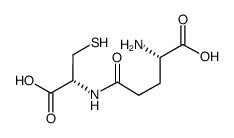
Gamma-glutamylcysteine structure
|
Common Name | Gamma-glutamylcysteine | ||
|---|---|---|---|---|
| CAS Number | 636-58-8 | Molecular Weight | 250.27200 | |
| Density | 1.436g/cm3 | Boiling Point | 592.4ºC at 760 mmHg | |
| Molecular Formula | C8H14N2O5S | Melting Point | 167℃ | |
| MSDS | Chinese USA | Flash Point | 312.1ºC | |
| Symbol |

GHS07 |
Signal Word | Warning | |
Use of Gamma-glutamylcysteineGamma-glutamylcysteine (γ-Glutamylcysteine), a dipeptide containing cysteine and glutamic acid, is a precursor to glutathione (GSH). Gamma-glutamylcysteine is a cofactor for glutathione peroxidase (GPx) to increase GSH levels[1]. |
| Name | L-γ-glutamyl-L-cysteine |
|---|---|
| Synonym | More Synonyms |
| Description | Gamma-glutamylcysteine (γ-Glutamylcysteine), a dipeptide containing cysteine and glutamic acid, is a precursor to glutathione (GSH). Gamma-glutamylcysteine is a cofactor for glutathione peroxidase (GPx) to increase GSH levels[1]. |
|---|---|
| Related Catalog | |
| Target |
Human Endogenous Metabolite |
| In Vitro | Co-treatment of Aβ40 oligomers with Gamma-glutamylcysteine (γ-Glutamylcysteine; GGC) at 200 μM increased the activity of the antioxidant enzymes superoxide dismutase (SOD) and glutathione peroxidase (GPx) and leads to significant increases in the levels of the total antioxidant capacity (TAC) and GSH and reduces the GSSG/GSH ratio. Gamma-glutamylcysteine also upregulates the level of the anti-inflammatory cytokine IL-10 and reduced the levels of the pro-inflammatory cytokines (TNF-α, IL-6, and IL-1β) and attenuates the changes in metalloproteinase activity in oligomeric Aβ40-treated astrocytes[1]. |
| References |
| Density | 1.436g/cm3 |
|---|---|
| Boiling Point | 592.4ºC at 760 mmHg |
| Melting Point | 167℃ |
| Molecular Formula | C8H14N2O5S |
| Molecular Weight | 250.27200 |
| Flash Point | 312.1ºC |
| Exact Mass | 250.06200 |
| PSA | 168.52000 |
| Index of Refraction | 1.57 |
| InChIKey | RITKHVBHSGLULN-WHFBIAKZSA-N |
| SMILES | NC(CCC(=O)NC(CS)C(=O)O)C(=O)O |
| Storage condition | −20°C |
| Symbol |
GHS07 |
|---|---|
| Signal Word | Warning |
| Hazard Statements | H315-H319-H335 |
| Precautionary Statements | P261-P305 + P351 + P338 |
| Personal Protective Equipment | dust mask type N95 (US);Eyeshields;Gloves |
| Hazard Codes | Xi |
| Risk Phrases | 36/37/38 |
| Safety Phrases | 26-36 |
| RIDADR | NONH for all modes of transport |
| WGK Germany | 3 |
| Precursor 9 | |
|---|---|
| DownStream 2 | |
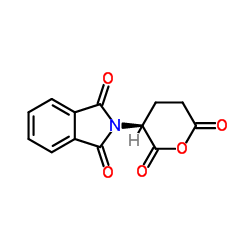 CAS#:25830-77-7
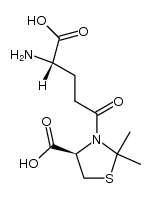 CAS#:100051-89-6
 CAS#:52-90-4
 CAS#:142-47-2
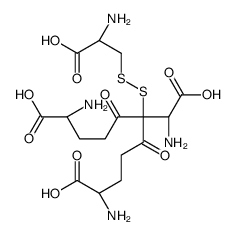 CAS#:23052-19-9
 CAS#:56-41-7
 CAS#:70-18-8
 CAS#:27025-41-8
 CAS#:4510-09-2
|
Metabolomic profiles delineate potential role for sarcosine in prostate cancer progression.
Nature 457(7231) , 910-4, (2009) Multiple, complex molecular events characterize cancer development and progression. Deciphering the molecular networks that distinguish organ-confined disease from metastatic disease may lead to the i... |
|
|
Free fatty acids enhance the oxidative damage induced by ethanol metabolism in an in vitro model.
Food Chem. Toxicol. 76 , 109-15, (2015) In recent years, there has been a growing interest to explore the responsiveness to injury in steatotic hepatocyte. VL-17A cells, which express ADH and Cyp2E1 overloaded with free fatty acids (1 mM of... |
|
|
Endogenic oxidative stress response contributes to glutathione over-accumulation in mutant Saccharomyces cerevisiae Y518.
Appl. Microbiol. Biotechnol. 99 , 7069-78, (2015) Mechanisms of glutathione (GSH) over-accumulation in mutant Saccharomyces cerevisiae Y518 screened by ultraviolet and nitrosoguanidine-induced random mutagenesis were studied. Y518 accumulated higher ... |
| Glutathione Impurity D |
| L-gamma-glutamyl-L-cysteine |
| (2S)-2-amino-5-[[(1R)-1-carboxy-2-sulfanylethyl]amino]-5-oxopentanoic acid |
| g-L-Glutamyl-L-cysteine |
| 5-L-Glutamyl-L-cysteine |
| (S)-2-amino-5-(((R)-1-carboxy-2-mercaptoethyl)amino)-5-oxopentanoic acid |
| (Des-Gly)-Glutathione (reduced) |