Taxifolin
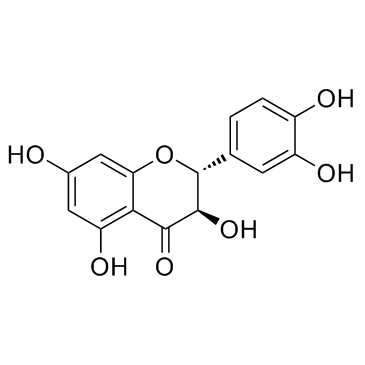
Taxifolin structure
|
Common Name | Taxifolin | ||
|---|---|---|---|---|
| CAS Number | 480-18-2 | Molecular Weight | 304.252 | |
| Density | 1.7±0.1 g/cm3 | Boiling Point | 687.6±55.0 °C at 760 mmHg | |
| Molecular Formula | C15H12O7 | Melting Point | 230-233°C (dec.) | |
| MSDS | USA | Flash Point | 264.2±25.0 °C | |
Use of TaxifolinTaxifolin exhibits important anti-tyrosinase activity. Taxifolin exhibits significant inhibitory activity against collagenase with an IC50 value of 193.3 μM. |
This table lists Chinese names, IUPAC names and various aliases of this chemical substance.
| Name | (+)-taxifolin |
|---|---|
| Synonym | More Synonyms |
This table contains bioactivity, target information and biological‑assay experimental data of this compound.
| Description | Taxifolin exhibits important anti-tyrosinase activity. Taxifolin exhibits significant inhibitory activity against collagenase with an IC50 value of 193.3 μM. |
|---|---|
| Related Catalog | |
| Target |
IC50: 193.3 μM (Collagenase)[1] Tyrosinase[1] |
| In Vitro | This is confirmed by the investigation of pure Taxifolin and (+)-Catechin against collagenase activity. Taxifolin exhibits significant inhibitory activity with an IC50 value of 193.3 μM while (+)-Catechin is not active[1]. Taxifolin is a ubiquitous bioactive constituent of foods and herbs. Taxifolin (dihydroquercetin) is a bioactive flavanonol commonly found in grapes, citrus fruits, onions, green tea, olive oil, wine, and many other foods, as well as several herbs (such as milk thistle, French maritime bark, Douglas fir bark, and Smilacis Glabrae Rhizoma)[2]. |
| In Vivo | Taxifolin may be easily metabolized and that its metabolites are the prevalent form in vivo, although limited information is available on metabolism of Taxifolin in vivo[2]. |
| Animal Admin | Rats[2] Twelve male Sprague-Dawley rats (weighing 180-220 g) are used. The rats are randomly divided into two groups (six rats per group), a drug group and a blank group. Taxifolin is suspended in 0.5% CMC-Na solution and orally administered to the drug group at a dose of 200 mg/kg body weight, while blank group rats are orally administered 0.5% CMC-Na solution at the same volume. All rats are dosed once a day (at 9:00 a.m.) for 3 days. |
| References |
This table shows physicochemical parameters including melting point, boiling point, density, solubility and optical rotation. Missing data is marked as N/A.
| Density | 1.7±0.1 g/cm3 |
|---|---|
| Boiling Point | 687.6±55.0 °C at 760 mmHg |
| Melting Point | 230-233°C (dec.) |
| Molecular Formula | C15H12O7 |
| Molecular Weight | 304.252 |
| Flash Point | 264.2±25.0 °C |
| Exact Mass | 304.058289 |
| PSA | 127.45000 |
| LogP | 1.82 |
| Vapour Pressure | 0.0±2.3 mmHg at 25°C |
| Index of Refraction | 1.763 |
| InChIKey | CXQWRCVTCMQVQX-LSDHHAIUSA-N |
| SMILES | O=C1c2c(O)cc(O)cc2OC(c2ccc(O)c(O)c2)C1O |
| Storage condition | -20?C Freezer |
This table provides MSDS information including hazard classification, first‑aid, fire‑fighting, spill handling, operation and storage instructions.
This table summarizes toxicological test data, acute & chronic toxicity and ecological hazard parameters for this chemical.
CHEMICAL IDENTIFICATION
HEALTH HAZARD DATAACUTE TOXICITY DATA
MUTATION DATA
|
This table covers safety warnings, protective measures, incompatible substances and disposal guidelines for this compound.
| Personal Protective Equipment | Eyeshields;Gloves;type N95 (US);type P1 (EN143) respirator filter |
|---|---|
| Risk Phrases | R22 |
| Safety Phrases | S22-S24/25 |
| RIDADR | NONH for all modes of transport |
| WGK Germany | 3 |
| RTECS | LK6920000 |
| HS Code | 2932999099 |
This table presents publicly reported synthetic routes, reaction conditions, reactants and product information of the compound.
This table lists upstream starting materials and downstream derivative products related to this chemical.
| Precursor 8 | |
|---|---|
| DownStream 8 | |
 CAS#:1298135-47-3
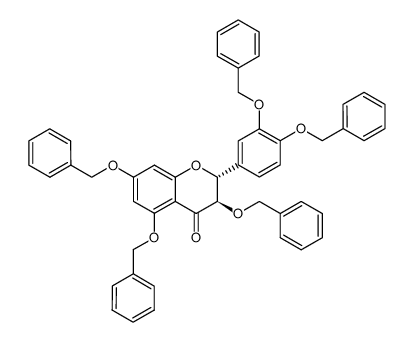 CAS#:574749-31-8
 CAS#:36804-13-4
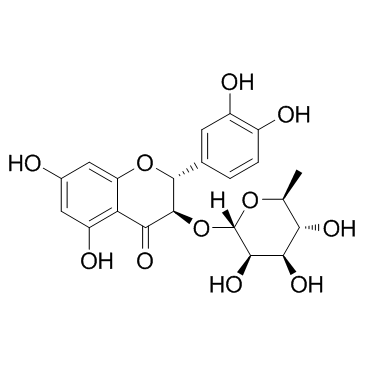 CAS#:29838-67-3
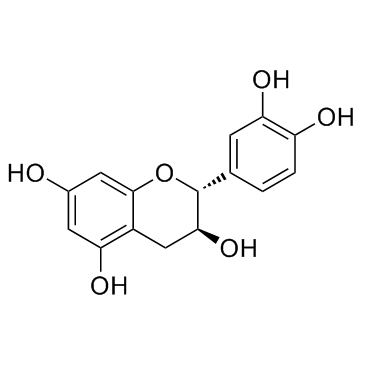 CAS#:154-23-4
![(2R-trans)-2-[3,4-bis(phenylmethoxy)phenyl]-3,4-dihydro-3,5,7-tris(phenylmethoxy)-2H-1-benzopyran Structure](https://image.chemsrc.com/caspic/447/85443-49-8.png) CAS#:85443-49-8
CAS#:85443-49-8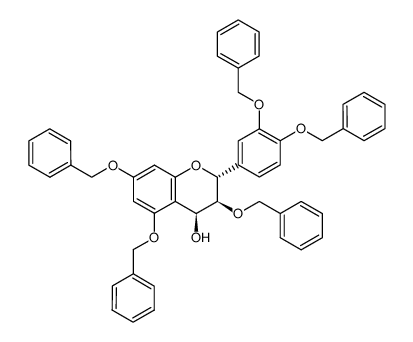 CAS#:574749-29-4
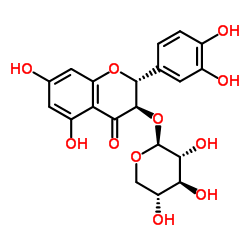 CAS#:40672-47-7
 CAS#:855-97-0
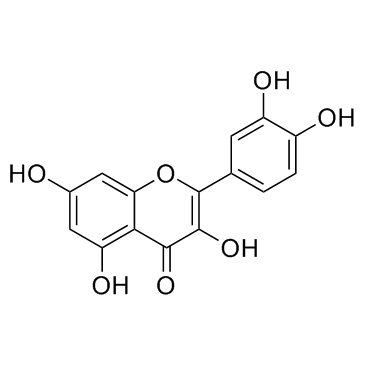 CAS#:117-39-5
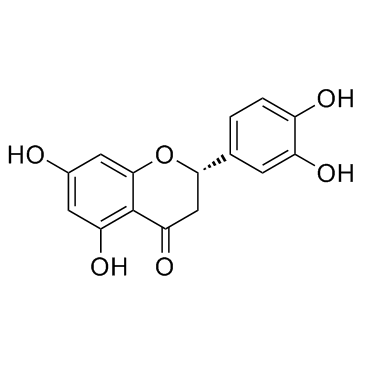 CAS#:552-58-9
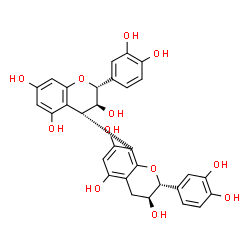 CAS#:23567-23-9
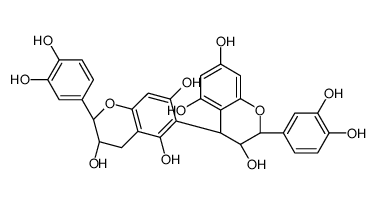 CAS#:12798-57-1
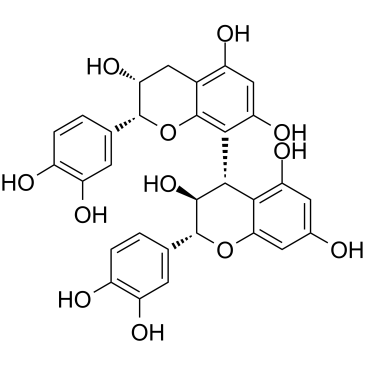 CAS#:29106-51-2
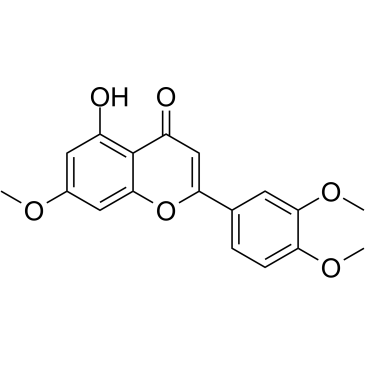 CAS#:29080-58-8
This table shows customs‑related data including HS‑code, tariff and regulatory conditions for import and export.
| HS Code | 2932999099 |
|---|---|
| Summary | 2932999099. other heterocyclic compounds with oxygen hetero-atom(s) only. VAT:17.0%. Tax rebate rate:13.0%. . MFN tariff:6.5%. General tariff:20.0% |
This table lists relevant public references with title, journal and publication metadata for this compound.
|
Combined experimental and in silico approaches for exploring antiperoxidative potential of structurally diverse classes of antioxidants on docetaxel-induced lipid peroxidation using 4-HNE as the model marker.
Bioorg. Chem. 56 , 1-7, (2014) The objective of the present work was tantamount to explain the antiperoxidative potential and structural requirements of twenty-eight structurally diverse classes of antioxidants on docetaxel-induced... |
|
|
In vitro effects of myricetin, morin, apigenin, (+)-taxifolin, (+)-catechin, (-)-epicatechin, naringenin and naringin on cytochrome b5 reduction by purified NADH-cytochrome b5 reductase.
Toxicology 308 , 34-40, (2013) The microsomal NADH-dependent electron transport system consisting of cytochrome b5 reductase and cytochrome b5 participates in a number of physiologically important processes including lipid metaboli... |
|
|
Chemical profiling and quantification of Gua-Lou-Gui-Zhi decoction by high performance liquid chromatography/quadrupole-time-of-flight mass spectrometry and ultra-performance liquid chromatography/triple quadrupole mass spectrometry.
J. Chromatogr. B. Analyt. Technol. Biomed. Life Sci. 986-987 , 69-84, (2015) Gua-Lou-Gui-Zhi decoction (GLGZD) is a classical formula of traditional Chinese medicine, which has been commonly used to treat dysfunction after stroke, epilepsy and spinal cord injury. In this study... |
This table collects all English aliases, systematic names and CAS‑related synonyms of the compound.
| EINECS 207-543-4 |
| Dihydroquercetin |
| (3R)-2-(3,4-Dihydroxyphenyl)-3,5,7-trihydroxy-2,3-dihydro-4H-chromen-4-one |
| (2R,3R)-3,3',4',5,7-Pentahydroxyflavanone |
| Distylin |
| (+)-Taxifolin |
| (2S,3S)-2-(3,4-Dihydroxyphenyl)-3,5,7-trihydroxy-2,3-dihydro-4H-chromen-4-one |
| Taxifolin |
| MFCD00006845 |
| (-)-taxifolin |
| Taxifoliol |
| (2R,3R)-2-(3,4-Dihydroxyphenyl)-3,5,7-trihydroxy-2,3-dihydro-4H-chromen-4-one |
This section contains frequently‑asked‑questions about this compound, including basic parameters, properties, storage conditions and corresponding answers.
| Q: What are the downstream products of (+)-taxifolin? |
| A: Related downstream products(CAS) of (+)-taxifolin: 480-18-2;855-97-0;117-39-5;552-58-9;23567-23-9;12798-57-1;29106-51-2;29080-58-8. |
| Q: What is the InChIKey of (+)-taxifolin? |
| A: InChIKey of (+)-taxifolin is CXQWRCVTCMQVQX-LSDHHAIUSA-N. |
| Q: What is the safety information for (+)-taxifolin? |
| A: Safety information for (+)-taxifolin: S22-S24/25. |
| Q: What are the upstream materials of (+)-taxifolin? |
| A: Related upstream materials(CAS) of (+)-taxifolin: 1298135-47-3;574749-31-8;36804-13-4;29838-67-3;154-23-4;85443-49-8;574749-29-4;40672-47-7. |
| Q: What are the uses of (+)-taxifolin? |
| A: Main uses of (+)-taxifolin: Taxifolin exhibits important anti-tyrosinase activity. Taxifolin exhibits significant inhibitory activity against collagenase with an IC50 value of 193.3 μM. |
| Q: What are the storage conditions for (+)-taxifolin? |
| A: Storage conditions for (+)-taxifolin: -20?C Freezer. |
| Q: What is the molecular formula of (+)-taxifolin? |
| A: Molecular formula of (+)-taxifolin is C15H12O7. |
| Q: What is the boiling point of (+)-taxifolin? |
| A: Boiling point of (+)-taxifolin is 687.6±55.0 °C at 760 mmHg. |
| Q: What is the SMILES notation of (+)-taxifolin? |
| A: SMILES notation of (+)-taxifolin is O=C1c2c(O)cc(O)cc2OC(c2ccc(O)c(O)c2)C1O. |
| Q: What is the polar surface area (PSA) of (+)-taxifolin? |
| A: Polar surface area (PSA) of (+)-taxifolin is 127.45000. |
This table lists manufacturers and suppliers of this compound, including vendor names and product supply reference information.
| Shanghai Nianxing Industrial Co., Ltd |
| BioBioPha |
| Dayang Chem (Hangzhou) Co., Ltd. |
| naturewill |
| Henan Tianfu Chemical Co., Ltd. |
| Zhongshan Xingrui Chemical Co. , Ltd. |
The content on this webpage is sourced from various professional data sources. If you have any questions or concerns regarding the content, please feel free to contact service1@chemsrc.com.
- Shanghai Nianxing Industrial Co., Ltd
- China
- Product Name: Taxifolin
- Price: Check
- Purity: 98.0%
- Delivery: 10 Day
- Contact: Yang
- Email: sales@echemcloud.com
- BioBioPha
- China
- Product Name: Taxifolin
- Price: ¥Inquiry/5mg
- Purity: 98.0%
- Delivery: 10 Day
- Contact: Xueping-Zheng
- Email: 1477035482@qq.com
- Dayang Chem (Hangzhou) Co., Ltd.
- China
- Product Name: Taxifolin
- Price: $Inquiry/100g $Inquiry/1kg $Inquiry/100kg $Inquiry/1000kg
- Purity: 98.0%
- Delivery: Inquiry
- Contact: Ms Wang
- Email: enquiry@dycnchem.com
- naturewill
- China
- Product Name: Taxifolin
- Price: ¥Inquiry/5mg ¥Inquiry/20mg ¥Inquiry/100mg ¥Inquiry/1g
- Purity: 98.0%
- Delivery: Inquiry
- Contact: Bella
- Email: 3157321941@qq.com
- Henan Tianfu Chemical Co., Ltd.
- China
- Product Name: Taxifolin
- Price: $Inquiry/1kg $Inquiry/25kg $Inquiry/1000kg $Inquiry/10ton
- Purity: 99.0%
- Delivery: Inquiry
- Contact: Anson
- Email: info@tianfuchem.com
- Zhongshan Xingrui Chemical Co. , Ltd.
- China
- Product Name: Taxifolin
- Price: ¥Inquiry/25kg
- Purity: 98.0%
- Delivery: Inquiry
- Contact: Wang Jie

- Email: 3096638339@qq.com
Get all suppliers and price by the below link:
Reference only. check more Taxifolin price