Cortisone
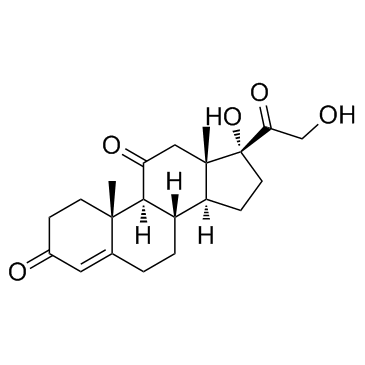
Cortisone structure
|
Common Name | Cortisone | ||
|---|---|---|---|---|
| CAS Number | 53-06-5 | Molecular Weight | 360.444 | |
| Density | 1.3±0.1 g/cm3 | Boiling Point | 567.8±50.0 °C at 760 mmHg | |
| Molecular Formula | C21H28O5 | Melting Point | 223-228 °C (dec.)(lit.) | |
| MSDS | Chinese USA | Flash Point | 311.2±26.6 °C | |
| Symbol |

GHS08 |
Signal Word | Warning | |
Use of CortisoneCortisone is a 21-carbon steroid hormone. Cortisone is one of the main hormones released by the adrenal gland in response to stress. Target: In chemical structure, it is a corticosteroid closely related to cortisol. It is used to treat a variety of ailments and can be administered intravenously, orally,intraarticularly (into a joint), or transcutaneously. Cortisone suppresses the immune system, thus reducing inflammation and attendant pain and swelling at the site of the injury. Risks exist, in particular in the long-term use of cortisone. Cortisone, a glucocorticoid, and adrenaline are the main hormones released by the body as a reaction to stress. They elevate blood pressure and prepare the body for a fight or flight response. |
This table lists Chinese names, IUPAC names and various aliases of this chemical substance.
| Name | cortisone |
|---|---|
| Synonym | More Synonyms |
This table contains bioactivity, target information and biological‑assay experimental data of this compound.
| Description | Cortisone is a 21-carbon steroid hormone. Cortisone is one of the main hormones released by the adrenal gland in response to stress. Target: In chemical structure, it is a corticosteroid closely related to cortisol. It is used to treat a variety of ailments and can be administered intravenously, orally,intraarticularly (into a joint), or transcutaneously. Cortisone suppresses the immune system, thus reducing inflammation and attendant pain and swelling at the site of the injury. Risks exist, in particular in the long-term use of cortisone. Cortisone, a glucocorticoid, and adrenaline are the main hormones released by the body as a reaction to stress. They elevate blood pressure and prepare the body for a fight or flight response. |
|---|---|
| Related Catalog |
This table shows physicochemical parameters including melting point, boiling point, density, solubility and optical rotation. Missing data is marked as N/A.
| Density | 1.3±0.1 g/cm3 |
|---|---|
| Boiling Point | 567.8±50.0 °C at 760 mmHg |
| Melting Point | 223-228 °C (dec.)(lit.) |
| Molecular Formula | C21H28O5 |
| Molecular Weight | 360.444 |
| Flash Point | 311.2±26.6 °C |
| Exact Mass | 360.193665 |
| PSA | 91.67000 |
| LogP | 1.44 |
| Vapour Pressure | 0.0±3.5 mmHg at 25°C |
| Index of Refraction | 1.587 |
| InChIKey | MFYSYFVPBJMHGN-ZPOLXVRWSA-N |
| SMILES | CC12CCC(=O)C=C1CCC1C2C(=O)CC2(C)C1CCC2(O)C(=O)CO |
| Storage condition | -20°C Freezer |
This table provides MSDS information including hazard classification, first‑aid, fire‑fighting, spill handling, operation and storage instructions.
This table summarizes toxicological test data, acute & chronic toxicity and ecological hazard parameters for this chemical.
CHEMICAL IDENTIFICATION
HEALTH HAZARD DATAACUTE TOXICITY DATA
MUTATION DATA
|
This table covers safety warnings, protective measures, incompatible substances and disposal guidelines for this compound.
| Symbol |
GHS08 |
|---|---|
| Signal Word | Warning |
| Hazard Statements | H361d |
| Precautionary Statements | P281 |
| Personal Protective Equipment | Eyeshields;Gloves;type N95 (US);type P1 (EN143) respirator filter |
| Hazard Codes | F,T,Xn |
| Risk Phrases | 11-23/24/25-39/23/24/25-63 |
| Safety Phrases | S22-S24/25 |
| RIDADR | NONH for all modes of transport |
| WGK Germany | 3 |
| RTECS | GM9020000 |
| HS Code | 2937210000 |
This table presents publicly reported synthetic routes, reaction conditions, reactants and product information of the compound.
This table lists upstream starting materials and downstream derivative products related to this chemical.
| Precursor 4 | |
|---|---|
| DownStream 10 | |
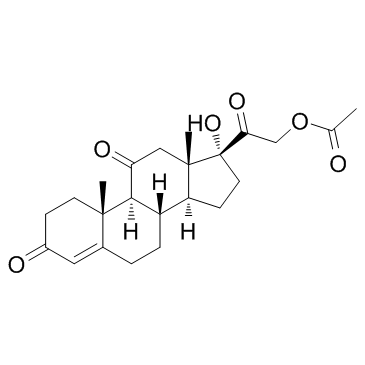 CAS#:50-04-4
 CAS#:3597-44-2
 CAS#:3941-62-6
![(3R,3aS,9aS,9bS)-2,3,3a,9,9a,9b-Hexahydro-3-hydroxy-3-(hydroxymethyl)-3a,6-dimethyl-1H-benz[e]indene-5,7-(4H,8H)-dione 3,1'-O-Isopropylidene Acetal Structure](https://image.chemsrc.com/caspic/446/128802-52-8.png) CAS#:128802-52-8
CAS#:128802-52-8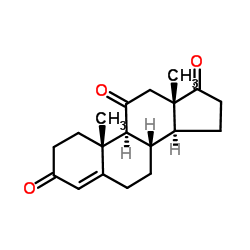 CAS#:382-45-6
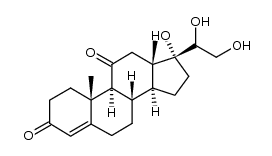 CAS#:3615-87-0
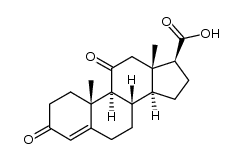 CAS#:3597-46-4
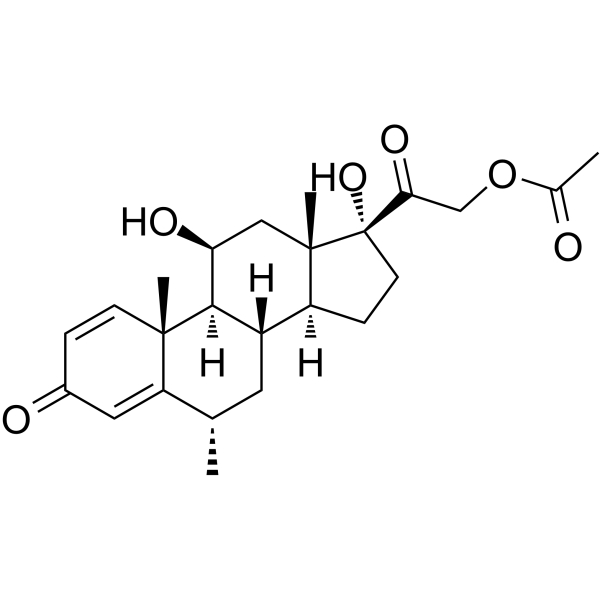 CAS#:53-36-1
 CAS#:50-23-7
 CAS#:516-15-4
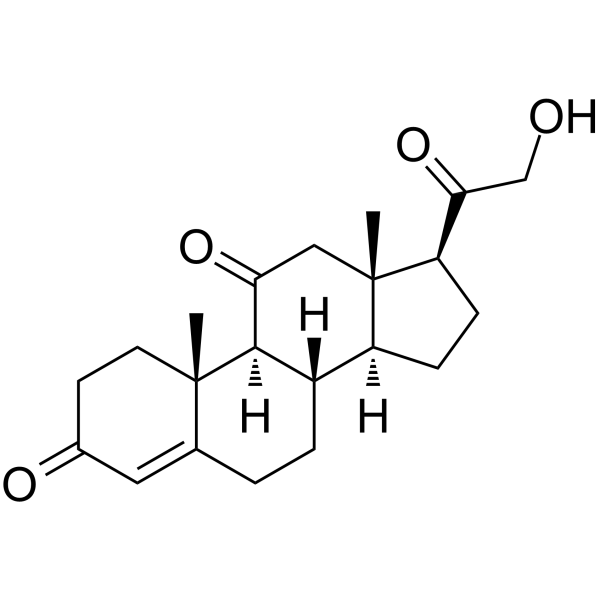 CAS#:72-23-1
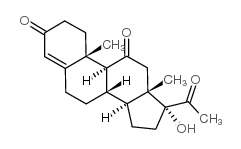 CAS#:1882-82-2
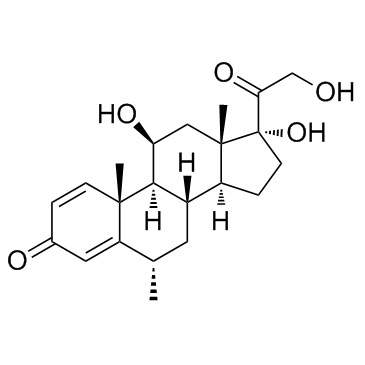 CAS#:83-43-2
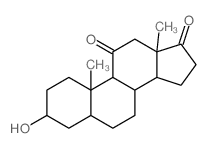 CAS#:739-27-5
This table shows customs‑related data including HS‑code, tariff and regulatory conditions for import and export.
| HS Code | 2937210000 |
|---|
This table lists relevant public references with title, journal and publication metadata for this compound.
|
Microwave-assisted derivatization: application to steroid profiling by gas chromatography/mass spectrometry.
J. Chromatogr. B. Analyt. Technol. Biomed. Life Sci. 960 , 8-13, (2014) Gas chromatography-mass spectrometry (GC-MS) remains as the gold-standard technique for the study of the steroid metabolome. A main limitation is the need of performing a derivatization step since inc... |
|
|
Catalytic enantioselective synthesis of quaternary carbon stereocentres.
Nature 516(7530) , 181-91, (2014) Quaternary carbon stereocentres-carbon atoms to which four distinct carbon substituents are attached-are common features of molecules found in nature. However, before recent advances in chemical catal... |
|
|
Detection and characterization of prednisolone metabolites in human urine by LC-MS/MS.
J. Mass Spectrom. 50(3) , 633-42, (2015) Glucocorticosteroids are prohibited in sports when used by systemic administrations (e.g. oral), whereas they are allowed using other administration ways. Strategies to discriminate between administra... |
This table collects all English aliases, systematic names and CAS‑related synonyms of the compound.
| Cortadren |
| Reichstein's substance FA |
| (8S,9S,10R,13S,14S,17R)-17-hydroxy-17-(2-hydroxyacetyl)-10,13-dimethyl-1,2,6,7,8,9,12,14,15,16-decahydrocyclopenta[a]phenanthrene-3,11-dione |
| Cortistal |
| Scheroson |
| [3H]-Cortisone |
| 17,21-Dihydroxypregn-4-ene-3,11,20-trione |
| D4-Pregnene-17a,21-diol-3,11,20-trione |
| EINECS 200-162-4 |
| Corlin |
| Cortogen |
| Cortone |
| Kendall's compound E |
| 17a,21-Dihydroxy-4-pregnene-3,11,20-trione |
| 17α,21-Dihydroxypregn-4-ene-3,11,20-trione |
| MFCD00003610 |
| Cortisate |
| Incortin |
| Cortisal |
| Andreson |
| Cortivite |
This section contains frequently‑asked‑questions about this compound, including basic parameters, properties, storage conditions and corresponding answers.
| Q: What is the safety information for cortisone? |
| A: Safety information for cortisone: S22-S24/25. |
| Q: What is the CAS number of cortisone? |
| A: CAS number of cortisone is 53-06-5. |
| Q: What is the boiling point of cortisone? |
| A: Boiling point of cortisone is 567.8±50.0 °C at 760 mmHg. |
| Q: What is the molecular weight of cortisone? |
| A: Molecular weight of cortisone is 360.444. |
| Q: What is the polar surface area (PSA) of cortisone? |
| A: Polar surface area (PSA) of cortisone is 91.67000. |
| Q: What are the storage conditions for cortisone? |
| A: Storage conditions for cortisone: -20°C Freezer. |
| Q: What are the downstream products of cortisone? |
| A: Related downstream products(CAS) of cortisone: 382-45-6;3615-87-0;3597-46-4;53-36-1;50-23-7;516-15-4;72-23-1;1882-82-2;83-43-2;739-27-5. |
| Q: What is the LogP of cortisone? |
| A: LogP of cortisone is 1.44. |
| Q: What is the molecular formula of cortisone? |
| A: Molecular formula of cortisone is C21H28O5. |
| Q: What is the InChIKey of cortisone? |
| A: InChIKey of cortisone is MFYSYFVPBJMHGN-ZPOLXVRWSA-N. |
This table lists manufacturers and suppliers of this compound, including vendor names and product supply reference information.
| Henan Tianfu Chemical Co., Ltd. |