Cordycepin
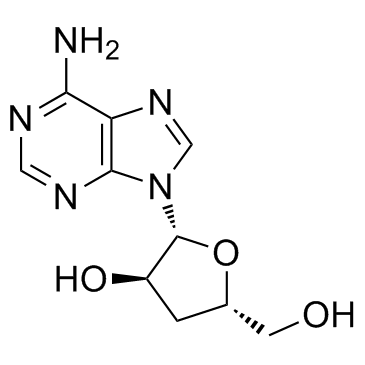
Cordycepin structure
|
Common Name | Cordycepin | ||
|---|---|---|---|---|
| CAS Number | 73-03-0 | Molecular Weight | 251.242 | |
| Density | 1.9±0.1 g/cm3 | Boiling Point | 627.2±65.0 °C at 760 mmHg | |
| Molecular Formula | C10H13N5O3 | Melting Point | 225-229ºC | |
| MSDS | Chinese USA | Flash Point | 333.1±34.3 °C | |
| Symbol |

GHS06 |
Signal Word | Danger | |
Use of CordycepinCordycepin, which is a nucleoside derivative isolated from Cordyceps, inhibits IL-1β-induced MMP-1 and MMP-3 expression in rheumatoid arthritis synovial fibroblasts (RASFs) in a dose-dependent manner. |
This table lists Chinese names, IUPAC names and various aliases of this chemical substance.
| Name | Cordycepin |
|---|---|
| Synonym | More Synonyms |
This table contains bioactivity, target information and biological‑assay experimental data of this compound.
| Description | Cordycepin, which is a nucleoside derivative isolated from Cordyceps, inhibits IL-1β-induced MMP-1 and MMP-3 expression in rheumatoid arthritis synovial fibroblasts (RASFs) in a dose-dependent manner. |
|---|---|
| Related Catalog | |
| Target |
MMP-1 MMP-3 |
| In Vitro | Cordycepin is a potent inhibitor of IL-1β-induced chemokine production and MMP expression and strongly blocks the p38/JNK/AP-1 signalling pathway in RASFs. The effect of Cordycepin on cellular toxicity of RASFs is assessed using MTT assay. Treatment of RASFs with Cordycepin (50 μM or 100 μM) for 24 h does not cause any significant change in cell viability. However, cell viability is slightly decreased when cells are incubated with 100 μM Cordycepin for 48 h[1]. |
| Cell Assay | RASFs (2×10⁴ cells/well) are treated with various concentrations of Cordycepin (50 μM or 100 μM). After incubation for 1 h, 12 h and 24 h, cells are washed twice with PBS, MTT (0.5 mg/mL PBS) is added to each well and incubated at 37°C for 30 min. Formazan crystals formed are dissolved by adding DMSO (100 μL/well) and the absorbance is read at 570 nm using a microplate reader[1]. |
| References |
This table shows physicochemical parameters including melting point, boiling point, density, solubility and optical rotation. Missing data is marked as N/A.
| Density | 1.9±0.1 g/cm3 |
|---|---|
| Boiling Point | 627.2±65.0 °C at 760 mmHg |
| Melting Point | 225-229ºC |
| Molecular Formula | C10H13N5O3 |
| Molecular Weight | 251.242 |
| Flash Point | 333.1±34.3 °C |
| Exact Mass | 251.101837 |
| PSA | 119.31000 |
| LogP | -0.41 |
| Vapour Pressure | 0.0±1.9 mmHg at 25°C |
| Index of Refraction | 1.863 |
| InChIKey | OFEZSBMBBKLLBJ-BAJZRUMYSA-N |
| SMILES | Nc1ncnc2c1ncn2C1OC(CO)CC1O |
| Storage condition | −20°C |
This table summarizes toxicological test data, acute & chronic toxicity and ecological hazard parameters for this chemical.
CHEMICAL IDENTIFICATION
HEALTH HAZARD DATAACUTE TOXICITY DATA
MUTATION DATA
|
This table covers safety warnings, protective measures, incompatible substances and disposal guidelines for this compound.
| Symbol |
GHS06 |
|---|---|
| Signal Word | Danger |
| Hazard Statements | H301-H315-H319-H335 |
| Precautionary Statements | P261-P301 + P310-P305 + P351 + P338 |
| Personal Protective Equipment | Eyeshields;Faceshields;Gloves;type P2 (EN 143) respirator cartridges |
| Hazard Codes | T:Toxic |
| Risk Phrases | R25;R36/37/38 |
| Safety Phrases | S26-S45 |
| RIDADR | UN 2811 |
| WGK Germany | 3 |
| RTECS | AU7358610 |
| HS Code | 29349990 |
This table lists upstream starting materials and downstream derivative products related to this chemical.
| Precursor 6 | |
|---|---|
| DownStream 7 | |
 CAS#:2627-64-7
![9-[2,5-bis-O-(tert-butyldimethylsilyl)-3-deoxy-β-D-ribofuranosyl]adenine Structure](https://image.chemsrc.com/caspic/346/116285-72-4.png) CAS#:116285-72-4
CAS#:116285-72-4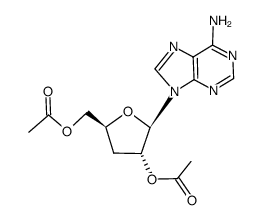 CAS#:71196-28-6
![(2R,3R,5S)-2-(6-aminopurin-9-yl)-5-[[(4-methoxyphenyl)-diphenylmethoxy]methyl]oxolan-3-ol Structure](https://image.chemsrc.com/caspic/326/51763-58-7.png) CAS#:51763-58-7
CAS#:51763-58-7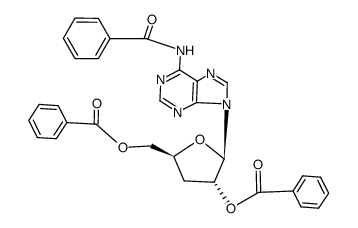 CAS#:4395-38-4
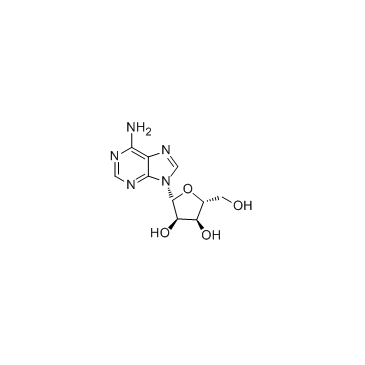 CAS#:58-61-7
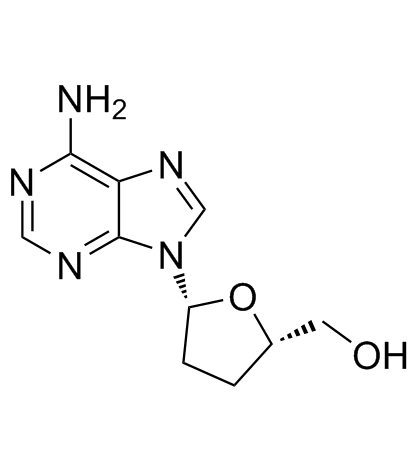 CAS#:4097-22-7
![[(2R,3R,5S)-2-(6-acetamidopurin-9-yl)-5-(hydroxymethyl)oxolan-3-yl] acetate structure](https://image.chemsrc.com/caspic/241/189887-77-2.png) CAS#:189887-77-2
CAS#:189887-77-2 CAS#:207347-42-0
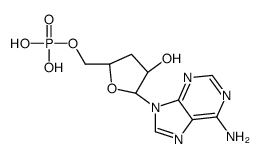 CAS#:17434-81-0
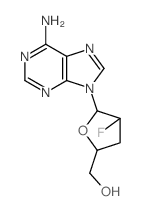 CAS#:110143-10-7
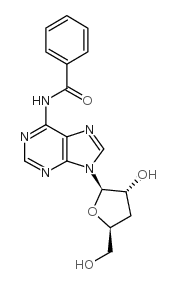 CAS#:76902-49-3
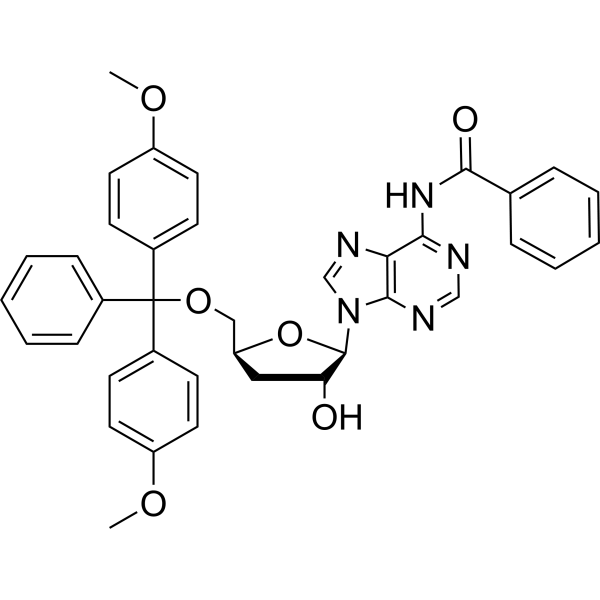 CAS#:84138-86-3
This table shows customs‑related data including HS‑code, tariff and regulatory conditions for import and export.
| HS Code | 2934999090 |
|---|---|
| Summary | 2934999090. other heterocyclic compounds. VAT:17.0%. Tax rebate rate:13.0%. . MFN tariff:6.5%. General tariff:20.0% |
This table lists relevant public references with title, journal and publication metadata for this compound.
|
Involvement of autophagy in cordycepin-induced apoptosis in human prostate carcinoma LNCaP cells.
Environ. Toxicol. Pharmacol. 38(1) , 239-50, (2014) Cordycepin, an active ingredient of the insect fungus Cordyceps spp., shows strong antioxidant and anticancer activities. Several molecular mechanisms have been attributed to its inhibitory effects on... |
|
|
Cheminformatics analysis of assertions mined from literature that describe drug-induced liver injury in different species.
Chem. Res. Toxicol. 23 , 171-83, (2010) Drug-induced liver injury is one of the main causes of drug attrition. The ability to predict the liver effects of drug candidates from their chemical structures is critical to help guide experimental... |
|
|
Anti-HCV activity of the Chinese medicinal fungusCordyceps militaris
Biochem. Biophys. Res. Commun. 447(2) , 341-5, (2014) • Cordyceps militaris (CM) had a moderate anti-HCV activity for RNA replication. • Cordycepin is a responsible compound for the anti-HCV activity of CM. • CM would be a useful anti-HCV agent in combin... |
This table contains target information, in‑vitro & in‑vivo assay data for this compound.
This table collects all English aliases, systematic names and CAS‑related synonyms of the compound.
| Adenine cordyceposide |
| EINECS 200-791-4 |
| Adenosine,3-deoxy |
| Cordycepine |
| MFCD00037998 |
| Cordycepin |
| Cordyceps fungus powder |
| cordycepin crystalline |
| 3'-Deoxyadenosine |
| (-)-cordycepin |
| 3'-Deoxy-D-adenosine |
This section contains frequently‑asked‑questions about this compound, including basic parameters, properties, storage conditions and corresponding answers.
| Q: What are the uses of Cordycepin? |
| A: Main uses of Cordycepin: Cordycepin, which is a nucleoside derivative isolated from Cordyceps, inhibits IL-1β-induced MMP-1 and MMP-3 expression in rheumatoid arthritis synovial fibroblasts (RASFs) in a dose-dependent manner. |
| Q: What is the melting point of Cordycepin? |
| A: Melting point of Cordycepin is 225-229ºC. |
| Q: What is the molecular formula of Cordycepin? |
| A: Molecular formula of Cordycepin is C10H13N5O3. |
| Q: What is the SMILES notation of Cordycepin? |
| A: SMILES notation of Cordycepin is Nc1ncnc2c1ncn2C1OC(CO)CC1O. |
| Q: What is the molecular weight of Cordycepin? |
| A: Molecular weight of Cordycepin is 251.242. |
| Q: What is the safety information for Cordycepin? |
| A: Safety information for Cordycepin: S26-S45. |
| Q: What is the CAS number of Cordycepin? |
| A: CAS number of Cordycepin is 73-03-0. |
| Q: What are the storage conditions for Cordycepin? |
| A: Storage conditions for Cordycepin: −20°C. |
| Q: What is the polar surface area (PSA) of Cordycepin? |
| A: Polar surface area (PSA) of Cordycepin is 119.31000. |
| Q: What are the upstream materials of Cordycepin? |
| A: Related upstream materials(CAS) of Cordycepin: 2627-64-7;116285-72-4;71196-28-6;51763-58-7;4395-38-4;58-61-7. |
This table lists manufacturers and suppliers of this compound, including vendor names and product supply reference information.
| Shanghai Nianxing Industrial Co., Ltd |
| BioBioPha |
| naturewill |
| Henan Tianfu Chemical Co., Ltd. |