2-Hydroxy-1,4-naphoquinone
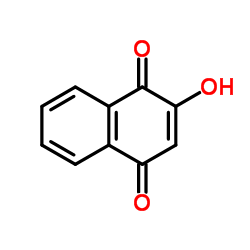
2-Hydroxy-1,4-naphoquinone structure
|
Common Name | 2-Hydroxy-1,4-naphoquinone | ||
|---|---|---|---|---|
| CAS Number | 83-72-7 | Molecular Weight | 174.153 | |
| Density | 1.5±0.1 g/cm3 | Boiling Point | 339.9±42.0 °C at 760 mmHg | |
| Molecular Formula | C10H6O3 | Melting Point | 192-195 °C (dec.)(lit.) | |
| MSDS | Chinese USA | Flash Point | 173.6±24.4 °C | |
| Symbol |

GHS07 |
Signal Word | Warning | |
Use of 2-Hydroxy-1,4-naphoquinoneLawsone is a naphthoquinone dye isolated from leaves of Lawsonia inermis that shows antimicrobial and antioxidant activity[1]. |
Summary: 2-羟基-1,4-萘醌 (lawsone), also known as 2-Hydroxy-1,4-naphoquinone, has a CAS number of 83-72-7 and a molecular formula of C10H6O3, with a molecular weight of 174.153. It appears as white cubic crystals, with a melting point of 192-195 °C and a boiling point of 339.9±42.0 °C, and a density of 1.5±0.1 g/cm³. For research-use only, not for medical or clinical usage.
This table lists Chinese names, IUPAC names and various aliases of this chemical substance.
| Name | lawsone |
|---|---|
| Synonym | More Synonyms |
This table contains bioactivity, target information and biological‑assay experimental data of this compound.
| Description | Lawsone is a naphthoquinone dye isolated from leaves of Lawsonia inermis that shows antimicrobial and antioxidant activity[1]. |
|---|---|
| Related Catalog | |
| References |
This table shows physicochemical parameters including melting point, boiling point, density, solubility and optical rotation. Missing data is marked as N/A.
| Density | 1.5±0.1 g/cm3 |
|---|---|
| Boiling Point | 339.9±42.0 °C at 760 mmHg |
| Melting Point | 192-195 °C (dec.)(lit.) |
| Molecular Formula | C10H6O3 |
| Molecular Weight | 174.153 |
| Flash Point | 173.6±24.4 °C |
| Exact Mass | 174.031693 |
| PSA | 54.37000 |
| LogP | 1.55 |
| Vapour Pressure | 0.0±0.8 mmHg at 25°C |
| Index of Refraction | 1.681 |
| InChIKey | WVCHIGAIXREVNS-UHFFFAOYSA-N |
| SMILES | O=C1C=C(O)c2ccccc2C1=O |
| Water Solubility | 2 g/L (20 ºC) |
This table provides MSDS information including hazard classification, first‑aid, fire‑fighting, spill handling, operation and storage instructions.
This table summarizes toxicological test data, acute & chronic toxicity and ecological hazard parameters for this chemical.
CHEMICAL IDENTIFICATION
HEALTH HAZARD DATAACUTE TOXICITY DATA
MUTATION DATA
|
This table covers safety warnings, protective measures, incompatible substances and disposal guidelines for this compound.
| Symbol |
GHS07 |
|---|---|
| Signal Word | Warning |
| Hazard Statements | H315-H319-H335 |
| Precautionary Statements | P261-P305 + P351 + P338 |
| Personal Protective Equipment | dust mask type N95 (US);Eyeshields;Gloves |
| Hazard Codes | Xn:Harmful; |
| Risk Phrases | R22;R36;R68 |
| Safety Phrases | S26-S37/39-S36/37/39 |
| RIDADR | NONH for all modes of transport |
| WGK Germany | 3 |
| RTECS | QL8200000 |
| Packaging Group | II |
| HS Code | 2914690090 |
This table presents publicly reported synthetic routes, reaction conditions, reactants and product information of the compound.
This table lists upstream starting materials and downstream derivative products related to this chemical.
| Precursor 9 | |
|---|---|
| DownStream 10 | |
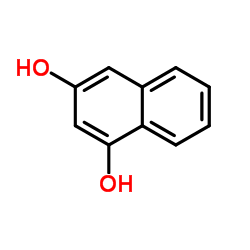 CAS#:132-86-5
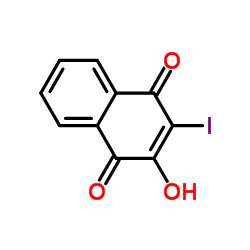 CAS#:35135-38-7
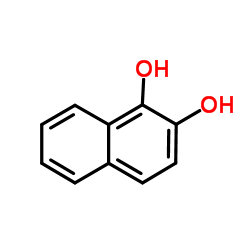 CAS#:574-00-5
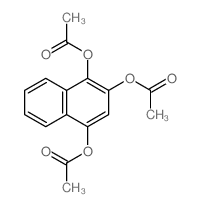 CAS#:1785-67-7
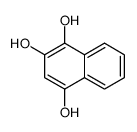 CAS#:13302-67-5
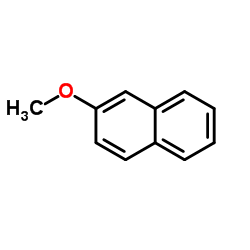 CAS#:93-04-9
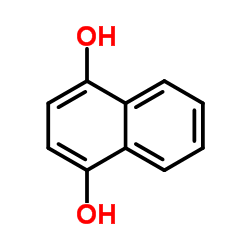 CAS#:571-60-8
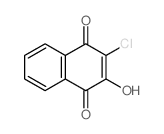 CAS#:1526-73-4
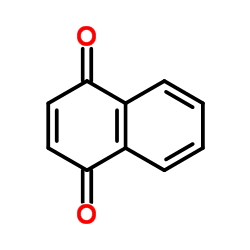 CAS#:130-15-4
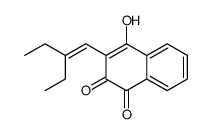 CAS#:105438-31-1
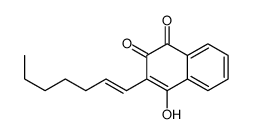 CAS#:106932-37-0
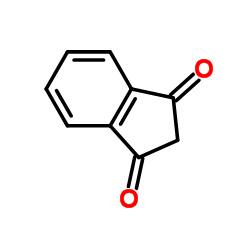 CAS#:606-23-5
 CAS#:33440-64-1
 CAS#:433-06-7
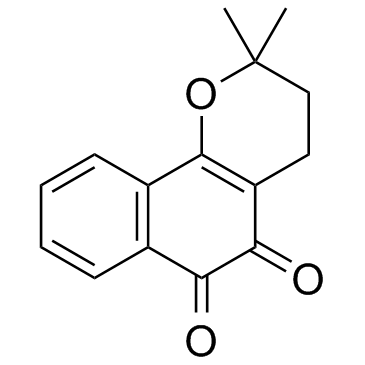 CAS#:4707-32-8
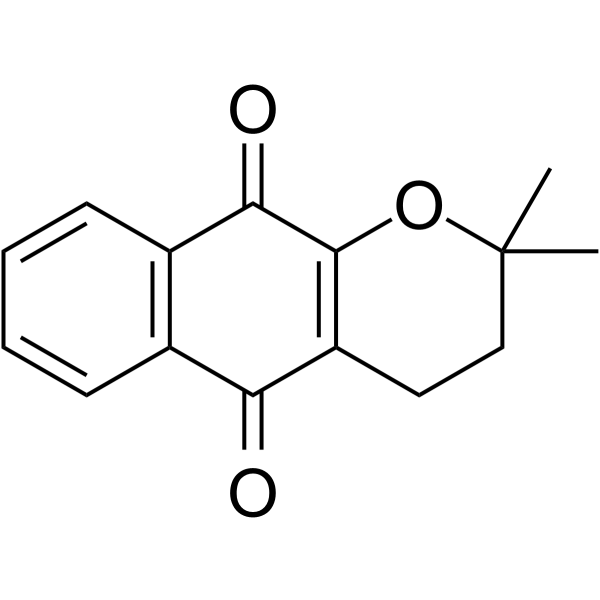 CAS#:4707-33-9
 CAS#:92458-44-1
![1,4-Naphthalenedione,2-[3-[4-(acetyloxy)phenyl]propyl]-3-hydroxy structure](https://image.chemsrc.com/caspic/088/18093-50-0.png) CAS#:18093-50-0
CAS#:18093-50-0This table shows customs‑related data including HS‑code, tariff and regulatory conditions for import and export.
| HS Code | 2914690090 |
|---|---|
| Summary | 2914690090 other quinones。Supervision conditions:None。VAT:17.0%。Tax rebate rate:9.0%。MFN tariff:5.5%。General tariff:30.0% |
This table lists relevant public references with title, journal and publication metadata for this compound.
|
Sensitive electrochemical detection of Salmonella with chitosan-gold nanoparticles composite film.
Talanta 140 , 122-7, (2015) An ultrasensitive electrochemical immunosensor for detection of Salmonella has been developed based on using high density gold nanoparticles (GNPs) well dispersed in chitosan hydrogel and modified gla... |
|
|
Allergic contact dermatitis caused by mehindi: a further case.
G. Ital. Dermatol. Venereol. 148(2) , 234-5, (2013)
|
|
|
Irritant contact dermatitis from a black henna tattoo without sensitization to para-phenylendiamine.
Pediatrics 131(6) , e1974-6, (2013) Allergic contact dermatitis from nonpermanent black henna tattoos has been frequently reported, particularly in children. Contamination or adulteration of the dyes with para-phenylendiamine has been i... |
This table collects all English aliases, systematic names and CAS‑related synonyms of the compound.
| C.I. Natural Orange 6 |
| MFCD00001678 |
| 2-Hydroxy-1,4-naphthochinone |
| 2-Hydroxy-1,4-naphoquinone |
| EINECS 201-496-3 |
| 2-Hydroxy-1,4-naphthoquinone |
| hydroxynaphthoquinone |
| Natural Orange 6 |
| 2-Hydroxy-p-naphthoquinone |
| 2-hydroxynaphthalene-1,4-dione |
| hennotannic acid |
| lawsone |
| 2-Hydroxy-1,4-napthoquinone |
This section contains frequently‑asked‑questions about this compound, including basic parameters, properties, storage conditions and corresponding answers.
| Q: How is the water solubility of lawsone? |
| A: Water solubility of lawsone: 2 g/L (20 ºC). |
| Q: What is the molecular weight of lawsone? |
| A: Molecular weight of lawsone is 174.153. |
| Q: What is the boiling point of lawsone? |
| A: Boiling point of lawsone is 339.9±42.0 °C at 760 mmHg. |
| Q: What are the uses of lawsone? |
| A: Main uses of lawsone: Lawsone is a naphthoquinone dye isolated from leaves of Lawsonia inermis that shows antimicrobial and antioxidant activity[1]. |
| Q: What is the InChIKey of lawsone? |
| A: InChIKey of lawsone is WVCHIGAIXREVNS-UHFFFAOYSA-N. |
| Q: What is the SMILES notation of lawsone? |
| A: SMILES notation of lawsone is O=C1C=C(O)c2ccccc2C1=O. |
| Q: What are the upstream materials of lawsone? |
| A: Related upstream materials(CAS) of lawsone: 132-86-5;35135-38-7;574-00-5;1785-67-7;13302-67-5;93-04-9;571-60-8;1526-73-4;130-15-4. |
| Q: What English synonyms does lawsone have? |
| A: English synonyms of lawsone: C.I. Natural Orange 6, MFCD00001678, 2-Hydroxy-1,4-naphthochinone, 2-Hydroxy-1,4-naphoquinone, EINECS 201-496-3, 2-Hydroxy-1,4-naphthoquinone, hydroxynaphthoquinone, Natural Orange 6, 2-Hydroxy-p-naphthoquinone, 2-hydroxynaphthalene-1,4-dione, hennotannic acid, lawsone, 2-Hydroxy-1,4-napthoquinone. |
| Q: What is the safety information for lawsone? |
| A: Safety information for lawsone: S26-S37/39-S36/37/39. |
| Q: What is the polar surface area (PSA) of lawsone? |
| A: Polar surface area (PSA) of lawsone is 54.37000. |
This table lists manufacturers and suppliers of this compound, including vendor names and product supply reference information.
| Shanghai Nianxing Industrial Co., Ltd |
| Henan Tianfu Chemical Co., Ltd. |